Malta sets €700,000 property threshold for special tax status in 2027
 Edward Nguyen
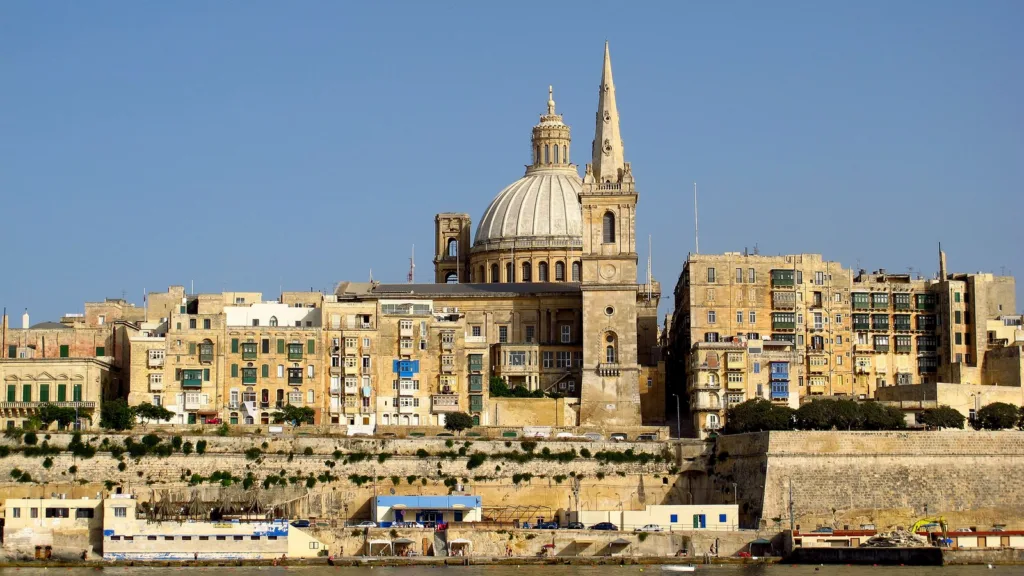
Valletta from the harbour. Malta sets a EUR 700,000 property threshold for its special tax status, applying from 2027.
The Individual Tax Programme Rules take effect on 1 January 2027, more than doubling the minimum annual tax in the main categories; applications by 31 December 2026 fall under a transitional proviso.
Malta has enacted a new framework for the special tax status under which a qualifying beneficiary pays 15 per cent on foreign income remitted to the island. The Individual Tax Programme Rules, 2026, made under articles 56(23) and 96 of the Income Tax Act and published as Legal Notice 195 of 2026 in Government Gazette No. 21,686 of 14 July 2026, come into force on 1 January 2027. A transitional proviso inside the rules turns on an earlier date, 31 December 2026, and that is the one a prospective applicant has to weigh.
What the rules change
The instrument creates four categories of special tax status: global resident, EU/EEA/Swiss resident, retired pensioner and UN pensioner. Those four correspond class for class to the eligibility of four programmes introduced between 2012 and 2015.
- The Malta Retirement Programme, for an individual whose pension is received wholly in Malta and is at least 75 per cent of chargeable income.
- The Global Residence Programme, for third-country nationals.
- The Residence Programme, for EU, EEA and Swiss nationals.
- The United Nations Pensions Programme, for recipients of a UN pension of which at least 40 per cent is received in Malta.
Those four rule sets remain in force and unamended.
The two rates are unchanged. Foreign income received in Malta is charged at 15 cents in the euro under rule 5(1), with relief for double taxation, and income outside that charge at 35 cents; the four existing programmes already charge at those rates. For a beneficiary in the UN pensioner category the UN pension itself is exempt under rule 5(2), and the 15 cents applies to other foreign income. What changes is the property threshold, the administrative fee, the minimum tax and the duration of the status.
| Four existing programmes | Individual Tax Programme, from 2027 | |
|---|---|---|
| Property purchase | €275,000 in Malta, €220,000 in Gozo or the south of Malta | €700,000, Malta or Gozo alike |
| Annual rent | €9,600 in Malta, €8,750 in Gozo or the south of Malta | €14,000 |
| Administrative fee on application | €2,500 to €6,000 by programme and location | €8,500 |
| Minimum annual tax | €15,000 (Global Residence and Residence); €7,500 plus €500 for each dependant and each special carer (Retirement); €10,000, and €5,000 more where both spouses receive a UN pension (UN Pensions) | €35,000 (global and EU/EEA/Swiss); €15,000 (retired pensioner); €20,000 (UN pensioner) |
| Duration | No fixed term, no renewal fee | Five years, renewable at €2,500 |
The regional discount disappears. For a purchase made after the commencement date, the threshold in Gozo and the south of Malta rises from €220,000 to €700,000, a bar more than three times higher; in the rest of Malta the multiple is 2.55. Buying is not the only route, since a lease at €14,000 a year qualifies instead. On the recurring side, the minimum tax for the two main categories rises from €15,000 to €35,000 a year, payable by 30 April of the year preceding the year of assessment and, under rule 5(4)(c), not refundable.
The status acquires a term
None of the four existing rule sets puts an end date on special tax status: each lists conditions whose failure ends the status, and none sets a term. Rule 3(3) grants status under the new rules for five years, renewable at the applicant’s option for further five-year periods on a €2,500 fee, and provides that renewal “shall not be unreasonably withheld by the Commissioner”. That wording constrains the Commissioner’s discretion, but it does not make renewal automatic, and it applies to a status that now has to be renewed at all.
Most of the qualifying conditions are carried over. A beneficiary must occupy the qualifying property as a primary residence, hold sickness insurance valid across the European Union and a valid travel document, show stable and regular resources, communicate adequately in an official language of Malta and be fit and proper; all six appear in the four existing programmes, as does the rule ending the status if the individual stays more than 183 days in any other jurisdiction in a calendar year.
Two differences cut in opposite directions. The domicile condition is extended: the requirement that a beneficiary is not domiciled in Malta and does not intend to establish domicile there within five years of applying has until now applied only to the retirement programme, and rule 4(k) applies it to all four classes. Running the other way, that same retirement programme obliged a beneficiary to reside in Malta at least 90 days a year averaged over any five-year period, and the new rules impose no minimum Malta-presence requirement.
What 31 December 2026 does
The third proviso to rule 3(3) is the clause a prospective applicant should read first. It provides that “any granting of special tax status made before or up to 31st December 2026, including for the avoidance of doubt, any applications for the granting of such status received up to the same date, shall continue to apply until 31st December 2031”. The proviso expressly brings applications received by the cut-off within what “shall continue to apply” to the end of 2031. It does not explain how that formulation works for an application still pending on the date.
Nor does it say which terms it preserves. For a status already granted, the property threshold and the minimum tax are the live questions, and the proviso continues the grant without stating that those conditions hold at their present levels. For an application not yet determined, there is the further question of which regime governs the decision when it comes. The natural reading is that a status granted under the existing rules continues on the existing rules’ terms, but that is an inference from the structure rather than something the words say.
A further gap runs underneath all of it. The rules do not come into force until 1 January 2027, so no status can be granted under them by 31 December 2026. The proviso appears intended to reach statuses under the four existing programmes, but it does not name them.
What the notice does not do
It does not close the four programmes. Legal Notice 195 of 2026 contains no revocation clause, no repeal and no provision shutting any of them to new applications; the words do not appear in its fifteen pages. Read on 3 September 2026, all four consolidated rule sets stand unamended, the most recent amendment to any of them being Legal Notice 69 of 2020, and no legal notice between 185 and 234 of 2026 — the last published in the Gazette of 1 September — touches them. Unless and until a closing instrument is made, the date in the proviso is not an enacted closure date, and the difference matters to anyone budgeting a purchase against it.
What to watch
Three matters are unresolved, and none of them answers the others. Rule 2 lets property bought on or before the commencement date for less than €700,000 count as qualifying, but only as the Commissioner may determine in guidelines published under article 96(2) of the Income Tax Act; those guidelines decide whether a Maltese property already owned still qualifies. Any amendment or revocation of the four existing programmes would fix whether and when they close. The reach of the rule 3(3) transition — what it preserves, and what it does for a pending application — is settled by neither. None had appeared in the Malta Tax and Customs Administration’s news archive when it was read on 3 September 2026, where the most recent item, dated 31 August, concerns customs; that archive is not necessarily the only channel through which such guidance would issue.
Read this article in Vietnamese
The Legation Times writes its content from published documents; nothing here is legal, tax or investment advice. Spotted an error? Send a correction request; for content rights, send a takedown request.