Egypt and Jordan set different citizenship terms
 Edward Nguyen
·updated 6 Sep 2026
Edward Nguyen
·updated 6 Sep 2026
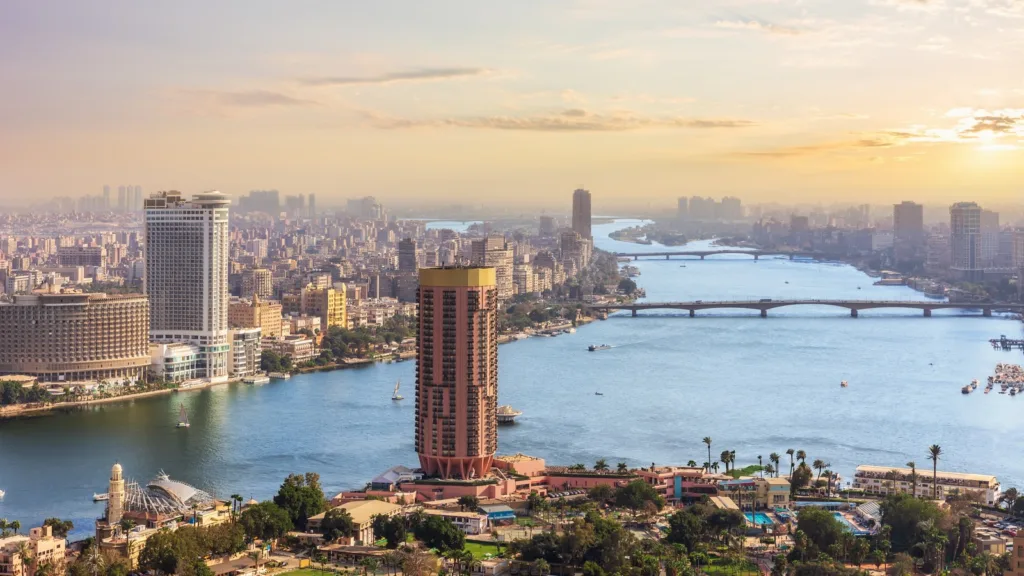
Egypt's four routes start at USD 250,000 under a March 2023 decree. In Jordan a new project outside the Capital Governorate needs JOD 500,000 and ten jobs, and three routes issue a temporary passport first.
Egypt’s thresholds for citizenship by investment are set in Prime Minister’s Decree No. 876 of 2023, published in the Official Gazette on 2 March 2023 and in force from 3 March.
Jordan’s thresholds are set in Cabinet principles that the Ministry of Investment published in a document dated 1 April 2026 and that the Cabinet amended on 15 July 2026. This article sets out what each instrument asks, route by route, and what each leaves open.
What changed, and when
Egypt’s current amounts come from Decree 876 of 2023, which replaced the first paragraph of Decree 3099 of 2019, the instrument issued on 18 December 2019 and in force from 19 December 2019 that first listed the cases.
Egyptian Streets, reporting the 2019 decree when the Cabinet approved it, gave its amounts as USD 500,000 for state-owned property, USD 400,000 for a project and USD 750,000 for a Central Bank deposit refundable after five years; the 2023 decree brought those to USD 300,000, USD 350,000 and USD 500,000, and shortened the deposit’s lock to three years.
A further instrument, Decree 3562 of 2023, was published in the gazette on 19 September 2023 and amended Decree 3099 of 2019 and Decree 647 of 2020, the decree that organises the unit examining naturalisation applications. Its text could not be read for this article.
Jordan’s Cabinet amended the principles on Wednesday 15 July 2026, at a session chaired by Prime Minister Jafar Hassan, and the Jordan News Agency reported the decision the same day.
Two things changed in the citizenship routes: the stock-market route rose from JOD 1 million to JOD 1.5 million, with the cap on any single company cut from 20 per cent to 10 per cent and the lock on the shares lengthened from three years to five; and a route was opened for investments of JOD 1.5 million in Amra City.
The Ministry of Investment page read on 6 September 2026 carries the amended terms; the Ministry’s principles of 1 April 2026, still online, carry the earlier ones.
What Egypt’s decree says
Decree 876 of 2023 allows the Prime Minister to grant Egyptian nationality to an applicant who meets the personal conditions in article 4 of the Nationality Law No. 26 of 1975 and falls within one of four cases.
In each case the decree requires the money to reach Egypt by bank transfer from abroad under the Central Bank’s rules, or to have entered through a customs point and been documented there.
| Route | Amount | What happens to the money |
|---|---|---|
| Property owned by the state or another public body | USD 300,000 or more | Paid for the property; the Prime Minister lists the buildings and land available for sale on the Housing Minister’s proposal |
| Investment project under the Investment Law | USD 350,000 or more invested in the project, plus USD 100,000 to the treasury | The USD 100,000 is direct foreign-currency revenue and is not returned |
| Deposit at the Central Bank | USD 500,000 | Refunded after three years, in Egyptian pounds at the exchange rate announced at the time of refund, without interest |
| Payment to the treasury | USD 250,000 | Direct foreign-currency revenue, not returned |
For the property and treasury cases the decree allows instalments over no more than one year.
Nationality is granted only after the last instalment; during the instalment period the applicant holds a temporary residence that is not a tourist permit; and an applicant in those two cases who defaults or withdraws is refunded in Egyptian pounds, at the Central Bank’s rate on the refund date and no higher than the rate on the day of payment, without interest.
The decree names no dependants and sets no annual number of grants.
One later change is known only from a press report.
Al Khaleej, on 14 September 2023, described the Cabinet’s approval of what became Decree 3562 of 2023 as rewording the property case to the purchase of a property of at least USD 300,000 without the restriction to state-owned assets, adding a declaration not to dispose of the property for five years, and fixing a USD 10,000 application fee payable by bank transfer from abroad.
Egypt’s own portal for the programme could not be reached on 6 September 2026, so the Al Khaleej report stands alone here.
What Jordan’s principles say
Jordan sets its conditions in capital and in Jordanian employees, counted from the records of the Social Security Corporation. The Ministry of Investment now lists seven routes to citizenship.
Four lead to citizenship directly under the principles once their conditions are met; in the other three the investor first receives a temporary Jordanian passport valid for three years, after which the Ministry recommends citizenship if compliance is verified over those three years.
| Route | Capital | Jobs | Sequence |
|---|---|---|---|
| Newly issued shares in Jordanian companies | JOD 1.5 million, not margin-financed, pledged or lent; bought within four months of the Ministry’s approval through one licensed broker; no more than 10 per cent in any one company; no withdrawal of funds or profits and no disposal for five years | none stated | citizenship |
| Employment of Jordanians | none stated | 150 in the Capital Governorate or 100 outside, registered for at least a year and kept for two more years under a written undertaking | citizenship |
| Existing investments | average share of eligible fixed and non-current tangible assets over the last three audited years of JOD 700,000 in the capital or JOD 350,000 outside | average of 20 or 10 Jordanians over those three years, with 90 per cent of the required level every month | citizenship |
| Medical warehousing, or food and large-scale logistics | JOD 3 million per partner, operational for 36 consecutive months while meeting the employment requirement | 20 in the capital or 10 outside | citizenship |
| New project | JOD 700,000 in the capital or JOD 500,000 outside | 20 or 10, with four months’ grace from the start of operations | temporary residency, then a three-year temporary passport, then a citizenship recommendation |
| New shares in an existing project | JOD 1 million, at least half of it in new fixed assets, held for three years | 20 per cent new jobs | three-year temporary passport, then a citizenship recommendation |
| Amra City | JOD 1.5 million in any activity | 20, with four months’ grace from the start of operations | temporary residency, then a three-year temporary passport, then a citizenship recommendation |
An investor whose project is one or two years old and already meets the tests may also take a temporary passport for the remaining part of the three-year period; the Ministry describes that as optional.
Residency is set separately. A five-year renewable permit follows the purchase of one property from a developer for JOD 200,000, from any other seller for JOD 300,000, or of one or more properties outside the Capital Governorate for a combined JOD 150,000 from any seller, all at the valuation of the Department of Lands and Survey.
The property must be held for five years without sale or mortgage, and the permit extends to eligible family members. On 17 July the Minister of Investment, Tareq Abu Ghazaleh, told Jordan Television that the previous rule had been a developer purchase of JOD 200,000 wherever the property stood.
Who qualifies, and for how many
The principles of 1 April 2026 named the family members who take citizenship with the investor. The text grants it to the spouse and to the investor’s sons and daughters, defining those children as unmarried sons under 24 at the time of application and unmarried, widowed or divorced daughters living in the investor’s care, and it adds the parents of the investor and of the spouse.
Where the investment exceeded JOD 2 million, sons under 30 were included together with their own spouses and children. The same document applied the principles to a maximum of 500 investors a year, counted across applications for citizenship and for five-year residency; made them subject to review every six months; and barred citizenship for anyone acquiring shares from an investor who had already obtained citizenship on them.
The Ministry’s page read on 6 September 2026 repeats none of those four provisions, and whether they remain in force after the July amendments could not be established from the sources checked.
What the figures show
On 17 July 2026 the Minister of Investment gave the programme’s totals on Jordan Television, as reported by the Jordan News Agency: more than JOD 1.15 billion invested since the 2018 launch, 685 investors, and more than 21,000 jobs by the end of the first half of 2026.
Investment linked to the programme exceeded JOD 72 million in the first half of 2026 against roughly JOD 37 million a year earlier, and the jobs created rose from 230 to 820. Those are the minister’s figures; the register behind them is not published.
No equivalent count for Egypt was found in the sources checked.
What is still open
Two matters could not be established from the documents opened for this article. The first is the text of Decree 3562 of 2023, and with it the exact wording of Egypt’s property case, the five-year non-disposal declaration and the fee.
The second is whether Jordan’s limit of 500 investors a year, its six-monthly review, its family clause and its bar on second-hand shares survived the July 2026 amendments. On 6 September 2026 the Ministry of Investment’s page answered with the amended terms and none of those four provisions; Egypt’s citizenship portal did not answer at all.
Related programmes
Updated 6 Sep 2026 — Rewritten on 6 September 2026 from the primary instruments: Egypt's Decree 876 of 2023 and Jordan's Ministry of Investment principles as amended on 15 July 2026.
The Legation Times writes its content from published documents; nothing here is legal, tax or investment advice. Spotted an error? Send a correction request; for content rights, send a takedown request.