Latvia’s new investor route runs through a fund the law does not name
 Edward Nguyen
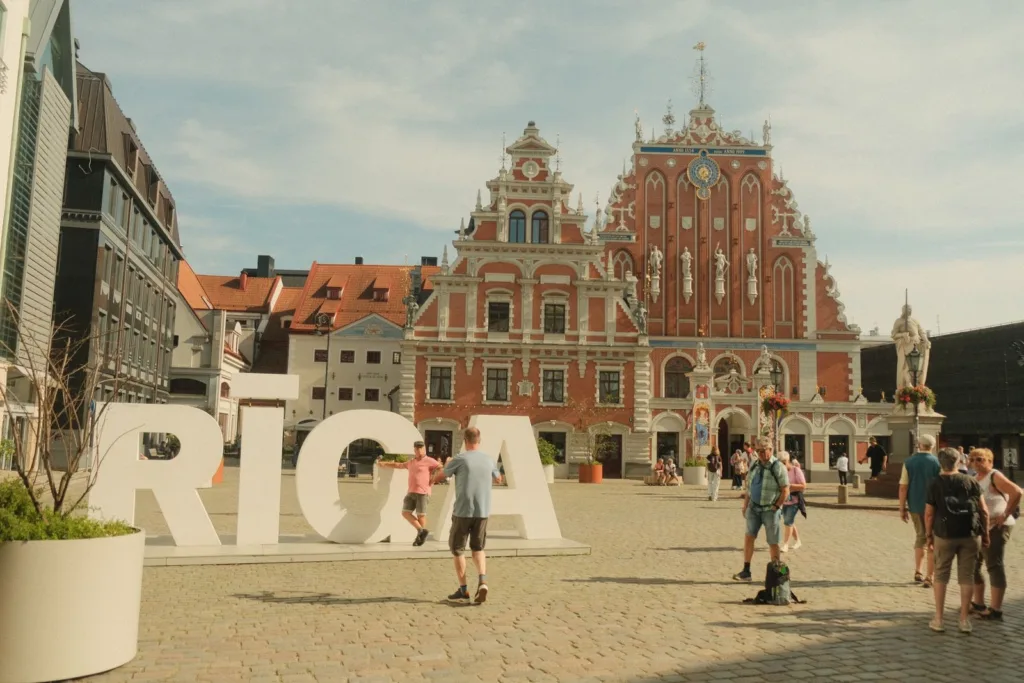
Latvia's new Immigration Law removes the €250,000 property and €280,000 bank residence routes, adds a €150,000 state fund route, and fixes no commencement date.
The Immigration Law adopted on 20 August replaces the property and bank routes to Latvian residence with a €150,000 fund investment. It identifies no fund, and it fixes no general commencement date, so the routes it removes close fourteen days after the law is proclaimed.
On 20 August 2026 the Saeima adopted a new Immigration Law that removes the property route and the bank route to Latvian residence — €250,000 in real estate and €280,000 in subordinated bank capital — and puts in their place a €150,000 investment in a state-established alternative investment fund.
The law identifies no such fund. It fixes no date for its own commencement, and it had not been proclaimed as of 26 August, so the routes it removes are still open.
What the second review changed, and what it did not
The law cleared its third reading on 11 June. President Edgars Rinkēvičs declined to proclaim it and on 19 June returned it to the Saeima for a second review, over the provisions granting residence against investment.
The President asked the legislator to satisfy itself that the regulation was complete, to consider whether the restriction on Russian and Belarusian citizens should be carried across into the new investment clause, to clarify how the origin of the money would be verified, and to weigh a residence route against the purchase of property for citizens of NATO, OECD and European Economic Area states.
Only proposals touching the contested provision were admissible on the second review. Twenty-one were filed, and the committee’s table of proposals records what became of each. Two members moved to delete the fund clause outright and the Prime Minister moved to rewrite it around a seven-year holding period and a registered or licensed fund manager; all three were ruled not examinable.
The Economy Minister proposed a property route for citizens of NATO, OECD and European Economic Area states and of visa-free countries, at €300,000, or €100,000 in a new apartment building in the Latgale planning region or Alūksne municipality. It was rejected, as was his separate proposal barring citizens of Russia and Belarus from the fund clause “including where he or she is simultaneously a citizen of another state”.
One proposal touching the investor route was adopted: the responsible committee’s own, extending the Cabinet’s power to suspend permit issuance so that it reaches the fund clause as well as the company clause. On that footing the Saeima passed the law, by 60 votes to 26 as the public broadcaster reported.
What an investor can buy, before and after
The table gives headline capital thresholds only. Every route carries further statutory conditions, and the property route carries a great many.
| Residence ground | In the Immigration Law now in force | In the law adopted 20 August |
|---|---|---|
| Property | Section 23(1)(29): €250,000, plus 5 per cent of the value into the state budget; up to five years | No such ground |
| Subordinated liabilities with a Latvian bank | Section 23(1)(30): €280,000 for at least five years, plus €25,000 into the state budget; up to five years | No such ground |
| Company share capital | Section 23(1)(28): €50,000 or €100,000 by company size, plus €10,000; up to five years | Article 27(1)(10): same amounts and the same tax-payment conditions on the company, but up to two years |
| Interest-free state securities | Repealed on 23 April 2026, no such ground since 20 May | No such ground |
| State alternative investment fund | No such ground | Article 27(1)(36): €150,000 for at least five years, plus €10,000; up to five years |
The property row compresses the most. The rule in force restricts eligible property by administrative territory, requires a cadastral value of at least €80,000 at purchase, bars agricultural and forest land, requires payment by non-cash settlement and the absence of property-tax arrears.
The seller must be either a company registered in Latvia, the European Union, the European Economic Area or Switzerland and taxable in Latvia, or a natural person who is a Latvian citizen, a Latvian non-citizen, a Union citizen or a foreigner holding a valid Latvian residence permit. An investor reading only the threshold is reading a fraction of the rule.

The securities row is a caution about vintage. That ground was struck out of Section 23 by the amending law of 23 April 2026 and ceased to exist on 20 May. Any material written before then still describes it as available.
The new clause reads, in full: a foreigner may request a temporary residence permit for up to five years if a contract has been concluded and a transfer made of at least €150,000, as an investment for not less than five years, to the manager of the state-established alternative investment fund, and if the foreigner has paid €10,000 into the state budget.
The permit issued under the clause remains valid if, during its period of validity, the manager of the state-established alternative investment fund confirms that the investment contract has not been terminated and that the investment balance is not less than €150,000.
Who that manager is, the law does not say. The words “alternative investment fund” and “manager” each appear exactly twice in the statute, and all four occurrences are inside the clause itself. No article defines the vehicle, names an institution, sets a date for creating it or places a duty on anyone to create it.
Latvia does have a state development finance institution registered as a manager of alternative investment funds, so the counterparty the clause describes is not fanciful. But the statute designates nobody, and the clause therefore sets a price before it settles who takes the money.
Who has to act, and by when
Transitional provision 4 is the operative one for anyone weighing a new Latvian file. Applications for a visa or a temporary residence permit lodged before the new law takes effect are examined, and permits issued, under the 2002 statute. For an otherwise eligible new applicant, the property and bank routes remain available up to commencement and not afterwards.
Existing holders are treated more gently than the removal suggests. Transitional provision 10 lets a property-route or bank-route holder, and their family members, obtain a repeat permit for up to five years with unrestricted employment rights. Four conditions attach:
- the application is filed while the previous permit is still valid;
- the investment still satisfies the old conditions;
- no refusal ground under Article 34 of the new law applies;
- a payment of €1,000 is made for each year of the previous and the new permit, reduced by what was already paid on the earlier permit.
What the provision settles is narrow and worth stating exactly: file inside the validity of the current permit and the concession is available; file outside it and the concession is not.
The date the statute does not give
The adopted text contains no general commencement clause. Three provisions carry their own timing — Article 48 from 31 December 2027, and Articles 67 and 97(5) from whenever a separate law is amended — but nothing states when the law as a whole, the investor provisions included, begins to apply.
The default fills the silence, and it is short. Article 69 of the Satversme provides that the President proclaims a law no earlier than the tenth and no later than the twenty-first day after adoption, and that a law takes effect fourteen days after proclamation unless it sets another term. This one sets none.
Proclamation is not a separate ceremony: under Article 4 of the Official Publications and Legal Information Law, a law is proclaimed within the constitutional periods by publishing it in the official gazette, and both periods are counted from the day after the event that starts them.
One procedure can lengthen that. Satversme Article 72 lets the President suspend publication for two months, and obliges him to do so if at least one third of the Saeima requests it — but the right must be exercised within ten days of adoption, which for this law means by 30 August.
Absent a suspension, the arithmetic points to commencement in weeks rather than months, and the exact day cannot be known until the gazette prints the law.
As of 26 August it had not printed it. What it did print, on 25 August, was a short amending law to the 2002 statute whose substantive parts are timed to “the Immigration Law adopted by the Saeima on 20 August 2026” — official confirmation of the adoption date, and of a commencement date still unfixed.
The figure circulating in industry summaries, 1 January 2027, does not appear in the text the Saeima adopted.
What is unresolved
- The vehicle. The route needs a state-established fund that takes investor money on these terms, and the statute does not create one. Of the delegations listed in transitional provision 3, the two that touch this route are Article 28, on suspending issuance, and Article 30, on where the €10,000 goes and when it may be refunded. Neither establishes a fund. By what instrument one would be established, and when, the law leaves open.
- Suspension. Article 28 lets the Cabinet suspend issuance under the fund clause, or the company clause, to nationals of particular third countries for up to five years, after assessing the effect on national security or economic development. The eligibility sits in statute; so does the power to close it to a named country by regulation. An investor pricing a five-year commitment is pricing both.
- Who may use it. The law in force works by permission: Russian and Belarusian citizens may request a temporary residence permit only in the cases it lists, and no investment ground is among them. The new Article 27 inverts that structure into two exclusion lists, and neither list reaches the fund clause. The amendment that would have added it was the one the Saeima rejected. That is a reading of the eligibility provisions and nothing more. Whether Union sanctions, anti-money-laundering duties or the general refusal grounds would bear on such an application is a separate question these provisions do not answer, and the second review added no source-of-funds test to the clause itself.
The next fact worth waiting for is a single line in Latvijas Vēstnesis. Publication proclaims the law, fixes the commencement date, and with it the point after which no new property or bank file can be lodged under the rules now in force.
The expiry of an existing investment permit needs to be measured against transitional provision 10 now rather than at renewal, because the concession runs only while the current permit is valid. For the €150,000 route, the narrower question comes first: which manager, on what terms, and open to subscriptions when.
Related programmes
- LatviaInvestor visa Open
The Legation Times writes its content from published documents; nothing here is legal, tax or investment advice. Spotted an error? Send a correction request; for content rights, send a takedown request.