Of four hubs, only Thailand taxes remitted foreign income as a rule
 Edward Nguyen
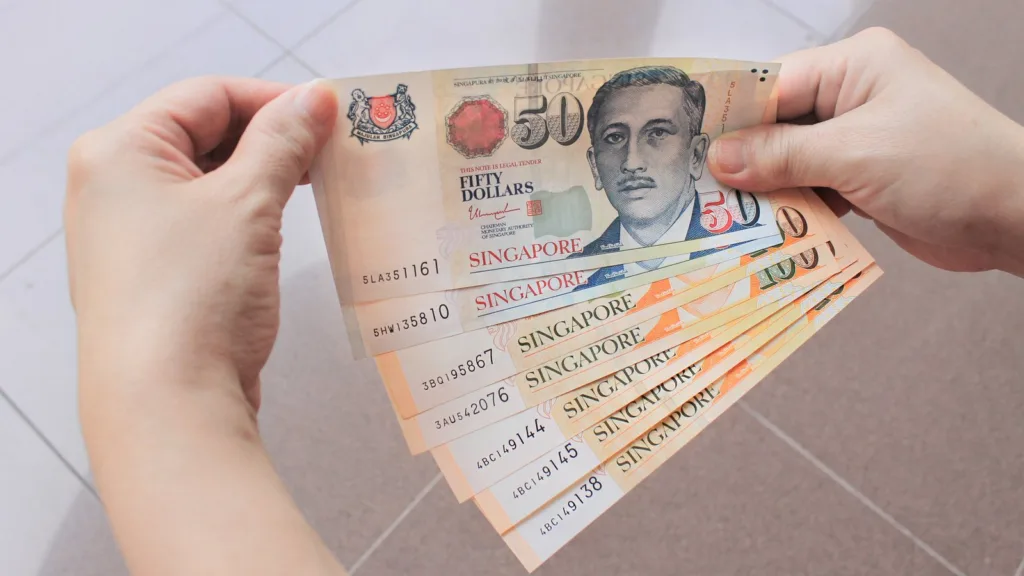
Singapore exempts residents' foreign income outside partnerships, the UAE has no personal income tax and Malaysia exempts it if taxed abroad, under an order extended to 2036. Thailand taxes it when brought in.
Since 1 January 2024, a resident of Thailand who brings income from work, business or property abroad into Thailand has been taxed on it in the year it arrives, under the Revenue Code as a Revenue Department instruction applies it; income arising before 2024 is excluded.
Singapore exempts such income except, in general, through a Singapore partnership. The United Arab Emirates (UAE) levies no income tax on individuals. Malaysia exempts it if taxed abroad, until 2026 and, by a 2024 amendment, until 2036.
For a family that settles in one of the four while keeping investments elsewhere, Vietnam included, the difference lies in what happens when dividends, interest, rent or gains from abroad are brought into or received in the country. This article covers a resident individual only. How tax residence is decided is covered in a separate article.
Thailand: taxed in the year it is brought in
Section 41 of the Revenue Code, in the Revenue Department’s English translation (the Thai text governs), provides that a resident who in the previous tax year derived income from employment or business carried on abroad, or from property situated abroad, pays tax on bringing that income into Thailand.
The department’s English summary puts it generally: a resident is taxed on Thai-source income and on the portion of foreign income brought into Thailand.
Departmental Instruction Paw. 161/2566, signed on 15 September 2023, fixes the year. A person resident under section 41 who has such income in a tax year, and brings it into Thailand “in any tax year whatsoever”, must include it in the computation for the year in which it is brought in (translation made for this article; no English version was found on the department’s site).
Read on its face, the Thai text indicates that residence is tested in the year the income arose, not the year it is brought in. The instruction applies to income brought in from 1 January 2024, and Paw. 162/2566, signed on 20 November 2023, excludes income that arose before that date.
The instruction describes itself as a practice guideline for revenue officers auditing and advising residents, and cancels any earlier ruling, reply to an enquiry or practice that conflicts with it.
Section 41, in the department’s translation, still speaks of income derived in the previous tax year, while the instruction reaches income brought in in any later year, a tension noted in an earlier article on the Long-Term Resident visa.
Residence requires 180 days or more in Thailand in a tax year (section 41), not the “more than 180 days” of the summary page. The top rate is 35% on net income above THB 5 million, under the schedule enacted in 2017, the latest found on the department’s site.
Nothing that changes the year-of-remittance rule was found on the department’s new-law list for 10 September 2025 to 9 October 2026 or on its list of public consultations.
Thailand also taxes inheritances. Under the 2015 Inheritance Tax Act, in the department’s English translation, an heir pays 10% on the value above THB 100 million received from each deceased person, or 5% as an ascendant or descendant, and a foreign national domiciled in Thailand under the immigration law pays on assets in or outside Thailand.
Singapore: exempt, with a partnership exception
Section 13(7A)(b) of the Income Tax Act 1947 exempts income from sources outside Singapore received there on or after 1 January 2004 by an individual resident in Singapore, if the Comptroller of Income Tax is satisfied that the exemption would be beneficial to the individual; it excludes income received through a partnership in Singapore.
The Inland Revenue Authority of Singapore (IRAS) pages read for this article do not mention the Comptroller condition. Section 13(8) separately exempts some foreign income received through a partnership, such as dividends, on conditions that include a foreign headline tax rate of at least 15%.
IRAS says overseas income received in Singapore, including income deposited into a Singapore bank account, is generally not taxable. None of the five taxable cases it lists concerns an individual’s own investment income: one is receipt through a Singapore partnership, and the other four concern employment or a trade connected with Singapore.
Residence turns on 183 days’ presence or employment, other than as a company director, in the preceding year (section 2), or, under an IRAS concession for foreigners, a continuous stay or work across three consecutive years. Resident rates run from 0% to 24%, the top rate applying to chargeable income above S$1 million from the year of assessment 2024.
Estate duty was removed for deaths on or after 15 February 2008.
The UAE: no personal income tax
“The UAE does not levy income tax on individuals,” the federal portal u.ae states. Corporate tax reaches an individual only through a business, and under Cabinet Decision No. 49 of 2023, in effect since 1 June 2023, only where the total turnover of their business activities exceeds AED 1 million in a calendar year.
Wages, personal investment income and real estate investment income do not count as business, whatever the amount. Personal investment is investment for one’s own account that neither is conducted through nor requires a licence from a UAE licensing authority, and is not a commercial business. Where corporate tax applies, the rate is 0% on taxable income up to AED 375,000 and 9% above.
The personal-investment definition makes no distinction between UAE and foreign investments, so dividends and interest from abroad appear to fall within it. The Federal Tax Authority’s guide on natural persons, which is guidance rather than law, treats a retired resident’s portfolio income as personal investment income, without saying where the portfolio is held.
The real-estate category refers to property in the UAE. No text was found that says whether rent from abroad counts as personal investment or as business, but either way corporate tax reaches an individual only through business turnover above AED 1 million.
The absence of a personal income tax indicates that residence matters mainly for the Tax Residency Certificate a resident may request.
Under Cabinet Decision No. 85 of 2022, from 1 March 2023, any one of three tests suffices: the usual residence and centre of financial and personal interests are in the UAE, or ministerial criteria are met; 183 days’ presence in 12 consecutive months; or 90 days for a UAE or Gulf Cooperation Council national or residence-permit holder with a permanent home, job or business there.
The English text on the authority’s site is marked as not an official translation, and the portal holding the official text returned an access error; the Ministry of Finance confirmed the 183-day and 90-day thresholds.
Malaysia: taxable by statute, exempt for individuals if taxed abroad
Foreign income received in Malaysia by a resident has been taxable since 1 January 2022, after the Finance Act 2021 amended the Income Tax Act 1967, according to the Inland Revenue Board’s guidelines of June 2024.
As the board describes it, the exemption order P.U.(A) 234/2022 exempts all foreign income other than partnership income received by a resident individual from 1 January 2022 to 31 December 2026, provided it has been subjected to tax in the country of origin.
The guidelines treat that condition as met where income tax or withholding tax was imposed abroad, and also where the income went untaxed there because of that country’s tax system, because the individual’s income was below its threshold, or because of a tax incentive; for foreign dividends, tax on the underlying profits also counts.
P.U.(A) 451/2024, made on 11 December 2024, replaces the 2026 end date with 31 December 2036 when it comes into operation on 1 January 2027, and the Finance Ministry’s Budget 2026 tax measures restate the 2036 date. The board’s June 2024 guidelines and its notes for the 2025 year of assessment print 2026, the date in operation until then.
From the 2025 year of assessment, a 2% dividend tax applies to an individual’s dividend income from shares in Malaysian companies, listed and unlisted, on the amount above RM100,000; the Budget 2025 measures listed dividend income from abroad as exempt from it.
A tax on gains from disposing of foreign capital assets, in place since 1 January 2024, applies to resident companies, limited liability partnerships, trust bodies and cooperative societies. Individuals are not on that list.
Residence requires 182 days or more in the basis year, or meeting alternative tests that link a shorter stay to adjacent years. The board’s latest rate table, for the 2023 to 2025 years of assessment, taxes chargeable income above RM2 million at 30%.
The Budget 2027 tax measures, published on 9 October 2026, propose applying 30% above RM1 million from the 2027 year of assessment; that is a proposal, not law. The deposit and home-purchase conditions of the Malaysia My Second Home programme are covered in a separate article.
What this article has not established
It was not established how IRAS applies the condition that the exemption be beneficial to the individual, or whether Singapore levies a wealth tax.
No official statement was found on an inheritance or wealth tax in the UAE. The official Arabic text of Cabinet Decision No. 85 of 2022 was not read, and amendments to Cabinet Decision No. 49 of 2023 were checked only on the first page of the authority’s legislation list.
In Thailand, section 41 was read in the department’s English translation. The Royal Gazette and the later pages of the department’s list were not searched, and it was not confirmed that the 2017 rate schedule and the THB 100 million inheritance threshold are unchanged.
In Malaysia, the 2022 exemption order was not read from an official source. No board guideline reflecting the 2036 date and no rate table for 2026 were found, nor any official text on estate duty or wealth tax; whether the Budget 2027 rate change is enacted is open.
The article does not cover double-taxation agreements, Vietnamese tax on the same income, or any individual’s position.
The Legation Times writes its content from published documents; nothing here is legal, tax or investment advice. Spotted an error? Send a correction request; for content rights, send a takedown request.