Canada budget would extend foreign-buyer ban on existing homes to 2029
 Michael Mai
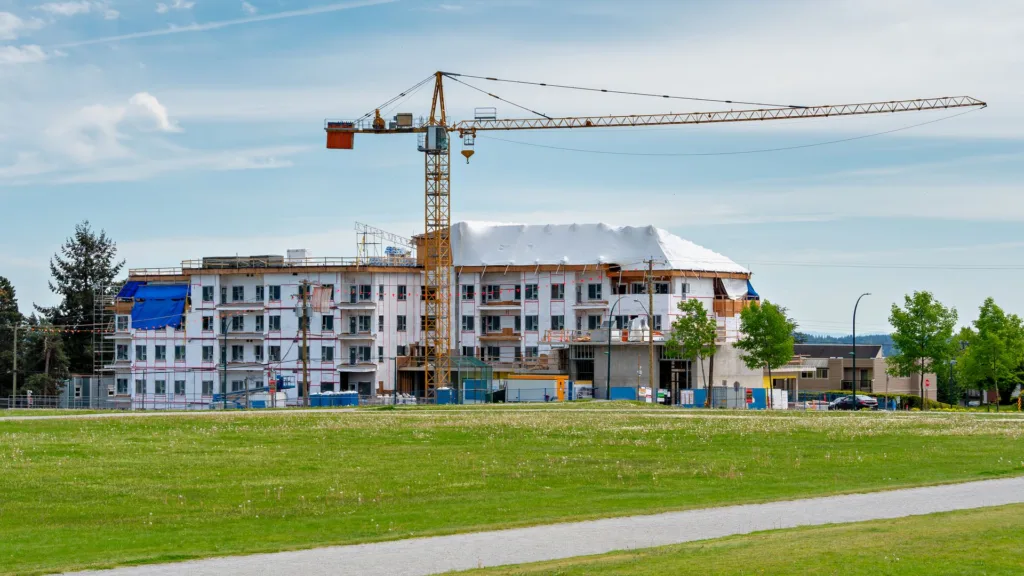
New homes would be exempt, but the budget's Chapter 3 and Annexes 3 and 4 give no definition of "new" and no start date, and the current ban is due to be repealed on 1 January 2027.
Canada’s federal budget, released in Ottawa on 5 November 2026, proposes to extend the ban on foreign buyers of existing homes by two years, to 1 January 2029, and to exempt new homes. The measure is a proposal, not law. The ban now in force is due to be repealed on 1 January 2027.
The budget proposes a two-year extension and an exemption for new homes
Chapter 3 of the budget states the measure in one sentence:
Budget 2026 proposes to extend the ban on foreign purchases of existing residential properties for two years, to January 1, 2029, while exempting new residential properties.
The passage gives the aim as protecting housing affordability by keeping the vast majority of the market available for Canadians while unlocking additional investment in new housing supply. It sets the timing without giving a date:
The federal government will propose legislation and launch a regulatory process on this change in short order.
Annex 3, the list of legislative measures, names the Act and proposes legislation to extend its application to 1 January 2029. Annex 4, the impacts report, describes the extension as covering existing and resale properties and the prohibition as lifted for new residential properties.
An earlier article on foreign-buyer rules recorded that an extension beyond January 2027 could not be established from an official source; the budget now proposes one.
The law in force today
The Prohibition on the Purchase of Residential Property by Non-Canadians Act took effect on 1 January 2023. Under section 149 of the Budget Implementation Act, 2024, No. 1, the Act’s repeal takes effect on the fourth anniversary of that day, 1 January 2027, and the Regulations are repealed on the same day. Both were read as consolidated to 19 October 2026.
An individual who is neither a Canadian citizen nor a permanent resident nor a person registered under the Indian Act is a non-Canadian, as are certain corporations and prescribed persons and entities. The ban covers houses and buildings of up to three dwelling units, and condominium and similar units, in census metropolitan areas and census agglomerations.
On summary conviction a breach carries a fine of up to CAD 10,000, and after conviction the province’s superior court may, on the Minister’s application, order the home sold.
A temporary resident may buy one property on prescribed conditions. A work permit holder needs 183 days or more of validity remaining on the date of purchase; a student needs filed tax returns and 244 days in Canada in each of the five years before the year of purchase, and a price of at most CAD 500,000.
A non-Canadian who buys with a spouse or common-law partner who is a Canadian citizen, a permanent resident, a person registered under the Indian Act, a protected person or a qualifying temporary resident is also outside the ban. Protected persons are exempt themselves, as are prescribed classes such as diplomats and eligible refugee claimants.
Neither the Act nor the Regulations, as consolidated, contains the word new or existing, and the definition of residential property does not separate new from old. Read on that text, new homes are inside the ban today, and Annex 4’s reference to lifting the prohibition for them points the same way, though no provision says so in terms.
Of the five exceptions to the meaning of purchase in the Regulations, one concerns development: an acquisition by a non-Canadian of residential property for the purposes of development is not a purchase.
What the budget leaves open
Chapter 3 and Annexes 3 and 4 do not define a new residential property, set a start date for the exemption, or say whether the exemption itself would come by legislation or by regulation: Annex 3 refers to legislation only for the extension. Three points follow:
- whether a unit sold before completion, or an unsold unit in a finished building, counts as new;
- when the exemption would start: before 1 January 2027, with the extension, or later;
- how it would sit beside the Regulations’ current exclusion for acquisitions for development.
What it means for a Vietnamese buyer
Vietnamese nationality gives no exemption under the Act or the Regulations. A Vietnamese citizen who is not a Canadian citizen, not a permanent resident and not registered under the Indian Act is a non-Canadian and, unless an exception applies, falls inside the ban for a home in a census metropolitan area or census agglomeration.
Nothing in the budget changes the law in force, so a purchase made now falls under the Act as it stands, with the penalties above.
If the proposal becomes law, new residential property would leave the ban on terms the budget does not give, while existing and resale homes would stay inside it until 1 January 2029. Until the definition exists, a buyer cannot tell on which side of the line a given unit falls.
What this article has not established
The records of the House of Commons and the Senate could not be read for this article and the Canada Gazette was not searched, so whether a bill has been introduced, or a regulation proposed, since 5 November is not established. How an agreement signed now that closes after 1 January 2027 would be treated is not established either.
Only English texts were used. Chapter 3 and Annexes 3 and 4 were read; the other chapters, Annexes 1 and 2 and the Budget in Brief were searched, and none of them uses the phrase “new residential properties”. The cover letter, the economic and fiscal overview, the supplementary tax material and the ways and means notices were not opened.
The Legation Times writes its content from published documents; nothing here is legal, tax or investment advice. Spotted an error? Send a correction request; for content rights, send a takedown request.