Australia limits foreign buyers of existing homes until June 2029
 Michael Mai
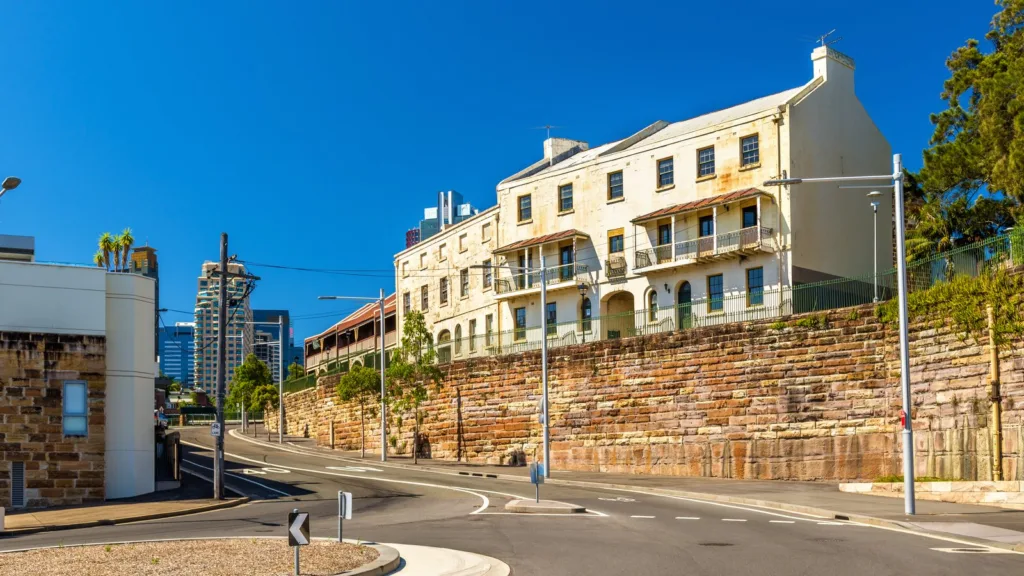
Heritage terraces in Millers Point, Sydney — illustration. From 1 April 2025 to 30 June 2029, Australian policy generally bars foreign persons from buying established dwellings.
Canada's ban is due to end on 1 January 2027; New Zealand offers qualifying investor-visa holders a consent route above NZD 5 million; Singapore's standard foreign-buyer surcharge is 60%.
Vietnamese nationality alone brings none of the nationality-based exemptions that Australia, Canada, New Zealand and Singapore give to some buyers. Whether a Vietnamese citizen can buy a home in these four countries, and at what extra cost, depends on residence status, the type and location of the property, and the date of the transaction. The rules differ sharply from one country to the next.
Australia: established homes restricted until June 2029
From 1 April 2025 to 30 June 2029, the Australian government’s policy is that foreign persons are generally banned from buying established dwellings, according to the Foreign Investment Review Board’s guidance of July 2026. The policy was first set to end in March 2027 and was extended in the 2026–27 budget. Limited exceptions, such as qualifying redevelopment and commercial-scale housing, still need approval. Holders of permanent visas, and New Zealand citizens holding or eligible for a Special Category Visa, do not need foreign-investment approval to buy residential property.
Foreign persons may still apply to buy new dwellings, homes bought off the plan and vacant land for building. For a standard application involving residential land without an established dwelling, the fee is AUD 15,600 where the price is between AUD 75,000 and AUD 1 million. For covered foreign-owned dwellings, an annual vacancy fee applies unless, for at least 183 days of the vacancy year, the home is genuinely lived in by the owner or a relative, let under a qualifying tenancy, or genuinely available for rent, with rental terms of at least 30 days; a late vacancy-fee return can also trigger the fee.
States levy separate surcharges on top of ordinary stamp duty, under their own definitions and exemptions: 9% in New South Wales, and 8% in Victoria and Queensland where their foreign-purchaser rules apply.
Canada: a ban due to lapse on 1 January 2027
Canada’s Prohibition on the Purchase of Residential Property by Non-Canadians Act applies to anyone who is not a citizen, a permanent resident or registered under the Indian Act. It covers houses, condominium units and similar homes in census metropolitan areas and census agglomerations. A breach carries a fine of up to CAD 10,000, and a court can order the home sold.
The exceptions are narrow. A holder of a work permit or work authorisation with at least 183 days of validity left may buy one property. A student enrolled in an authorised programme at a designated learning institution may buy one home of up to CAD 500,000 after filing all required tax returns for the five preceding tax years and spending at least 244 days in Canada in each of the five preceding calendar years.
The ban took effect on 1 January 2023. A 2024 budget law set its repeal for the fourth anniversary, 1 January 2027. No bill or regulation extending it beyond that date could be found in the official records read for this article.
Provincial taxes have their own rules and exemptions, and a federal exception does not remove them. British Columbia charges foreign buyers an additional 20% of the fair market value of their share of residential property in five regional districts: Capital, Fraser Valley, Metro Vancouver, Central Okanagan and Nanaimo, excluding Tsawwassen First Nation treaty lands. Ontario’s non-resident speculation tax, which applies across the province, has been 25% since 25 October 2022.
New Zealand: a consent route for investor-visa holders
Since 22 October 2018, overseas persons have generally been unable to buy residential land in New Zealand. A person who is ordinarily resident in New Zealand, including a holder of a resident visa who meets the residence test, is not an overseas person and does not need consent. Australian and Singaporean citizens can generally buy ordinary residential property without consent under free trade agreements; Vietnamese nationality confers no equivalent exemption.
An amendment that took effect on 6 March 2026 created a consent route for holders of the Active Investor Plus, Investor 1 and Investor 2 visas. The Overseas Investment Office will grant consent if the price, or the price of the land plus a new home, exceeds NZD 5 million including goods and services tax, the land is residential and not otherwise sensitive, it has a dwelling on it or a new one will be built, the investor does not already own residential land bought under this route, and the purchase is not contrary to the national interest. Only one property can be held through the qualifying visa.
Singapore: flats open, at a price
Singapore does not ban foreigners from buying condominium flats. Since 27 April 2023 it has charged foreigners an additional buyer’s stamp duty of 60% on any residential property, against 5% for a permanent resident buying a first home. Under free trade agreements, nationals and permanent residents of Iceland, Liechtenstein, Norway and Switzerland, and nationals of the United States, receive the same stamp duty treatment as Singapore citizens through remission. Vietnam is not on that list.
Landed homes are different. A foreign person, a category that includes permanent residents, generally needs approval from the Singapore Land Authority to buy landed residential property, including at Sentosa Cove. Strata landed houses within approved condominium developments are an exception.
What decides the outcome
Buyer status, property type, location and transaction dates together determine which restrictions and taxes apply. Australian permanent-visa holders do not need foreign-investment approval for residential purchases, and Canadian permanent residents fall outside the federal purchase prohibition, though state and provincial rules can still apply. Singapore’s standard surcharge for a permanent resident’s first home is 5%, but joint purchases and remissions can change the liability. In New Zealand, ordinary residence rather than permanent residence is the test, and the investor-visa route is a separate consent pathway, not local status.
Limits of this reading
Official sources describe Australia’s restriction as government policy applied through the approval process; the instrument that enacts it was not identified. Whether Canada will extend its ban beyond January 2027 could not be established from an official source.
The Legation Times writes its content from published documents; nothing here is legal, tax or investment advice. Spotted an error? Send a correction request; for content rights, send a takedown request.