Antigua reportedly offers to end citizenship by investment by end-2030
 Michael Mai
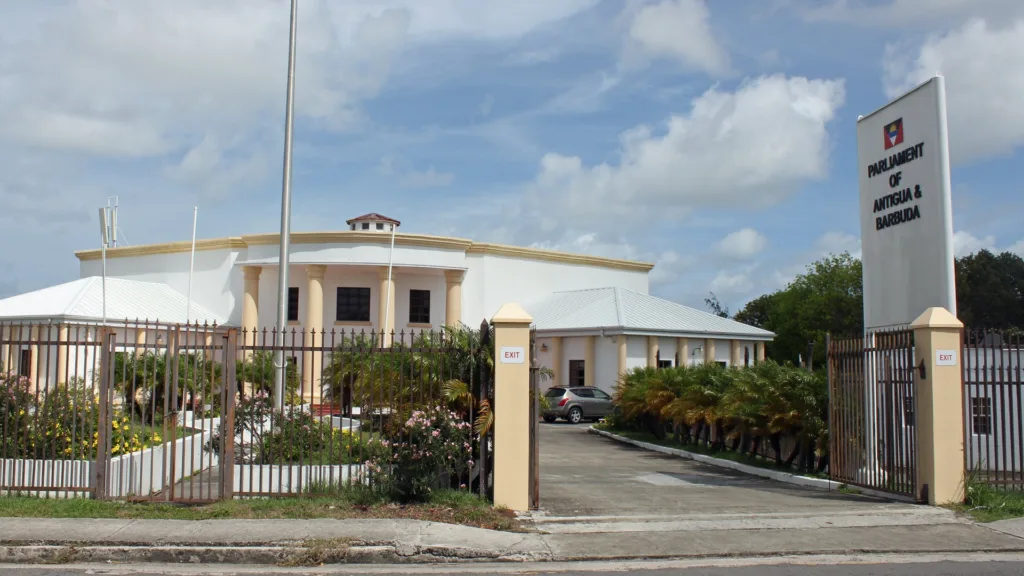
Antigua News Room reports an unpublished 30 October letter offering to close the programme by end-2030 if the EU gives financial and technical help; the Prime Minister calls 12 November a response deadline.
Antigua News Room reported on 30 October 2026 that Antigua and Barbuda has offered to close its Citizenship by Investment Programme by the end of 2030, provided the European Union agrees to a longer transition and gives financial and technical help. The outlet attributed the offer to an unpublished letter of the same date from Prime Minister Gaston Browne to Commissioner Magnus Brunner. No reply from the Commission has been found.
For a Vietnamese investor or family, as for any other applicant, the programme was still presented as operating on 3 November 2026. The website of the Citizenship by Investment Unit listed four investment routes, including a National Development Fund contribution of at least US$230,000 per application, and carried no notice on the European Union.
What the letter is reported to propose
Antigua News Room listed these terms:
- closure by the end of 2030, against the 1 June 2028 date the Commission has requested;
- an assessment of the financial, economic, social and legal consequences, with findings sent to the Commission by March 2027 and EU technical help to carry it out;
- EU financial support to offset lost revenue, investment and jobs, and dedicated assistance under the 2028 to 2034 financial framework, which, Browne noted, has no allocation yet for countries winding down such programmes;
- binding safeguards and cooperation with EU monitoring during the transition;
- acknowledgement of the conditional commitment in the Commission’s December report, approval of the transition, and talks on assistance once the assessment is complete.
Browne cited International Monetary Fund (IMF) findings on the programme’s part in a primary surplus of nearly 5 per cent of GDP in 2025, the outlet wrote, and warned that an abrupt stop could leave projects unfinished, expose developers to legal disputes and weaken banks that lent against expected proceeds. The outlet characterised the proposal as a willingness to close the programme under negotiated conditions, rather than an unconditional decision.
What the Prime Minister said afterwards
An earlier article covered the reports of 25 October that Antigua could suspend the programme by 12 November. On the Browne and Browne Show on Saturday 31 October, Antigua News Room reported on 1 November, Browne said that date is the one for Antigua and Barbuda to communicate its position to the EU, not a date for the programme to close.
He said: “The letter that was sent to us gave us a phase-out period until June of 2028. However, they wanted a commitment by November 12th.” According to Browne, the response deadline had been 30 September before it was extended.
The government has asked for a transition to December 2030, which he said would give just over four years, together with a socioeconomic study of ending the programme and losing visa-free access, and financial support.
Another report quoted him on the cost: “If you’re going to lose $100 million as a result of you making a demand and us closing our programme, what budgetary support are you prepared to give us?” The outlet noted that he did not specify the currency, and that the government awaits the EU’s response with no closing date, assistance package or revised deadline announced.
What the official record shows
The Government’s written position on the Commission’s request is its statement of 6 July, posted 7 July. It said the Commission’s letter of 25 June formally requested a phase-out by 1 June 2028, that the programme would continue, and that any agreed path must include tangible EU assistance to generate equivalent replacement revenue. This indicates that the condition set in July now appears with an end date attached, in the outlet’s account.
No Government text read mentions the proposal. The press-release list for 2026 had nothing dated after 30 October on 3 November, the Cabinet Notes of 21 and 28 October do not mention the programme or the EU, and the Unit’s site carries no notice.
Dominica’s statement of 28 October, covered in an earlier article, is an official text on the same talks. The statement says the talks include consideration of financial and technical assistance to develop alternative revenue sources, and that Dominica will communicate further with the EU by 12 November.
The IMF’s Country Report No. 26/97, which Browne is said to cite, carries both figures: public debt fell from 101 per cent of GDP in 2020 to an estimated 68 per cent in 2025, and the 2025 primary balance is estimated at 4.9 per cent, underpinned in part by stronger programme inflows.
The report puts programme revenue at 2.6 per cent of GDP in 2025 and 1.9 per cent in 2026. Its discussions ended on 30 January 2026, before the Commission’s letter.
The European Union rules
Regulation (EU) 2025/2441, whose steps an earlier article sets out, lets the Union suspend a country’s visa exemption if it operates an investor citizenship scheme granting citizenship for set payments or investments without a “genuine link”, a term it leaves undefined. A suspension covers the country’s nationals and lasts 12 months by Commission implementing act; if the grounds persist, a delegated act suspends it for a further 24 months.
The Regulation sets no dates. None of the EU texts read mentions 2030, 12 November or 30 September, and the Commission has not published its letter of 25 June.
What happens next, with dates
- 12 November, a Thursday: the date by which, in Browne’s account, Antigua and Barbuda is to communicate its position; Dominica says it will communicate further with the EU by the same date.
- December 2026: the Commission’s report under the visa suspension mechanism, which, the Government says, the EU has indicated will reflect Antigua and Barbuda’s response.
- January 2027: when, in Browne’s account, the Commission could announce a suspension, effective around March or April, if there is no agreement.
- March 2027: when, under the proposal, the assessment’s findings would go to the Commission.
What this article has not established
The text of the letter is not established. Antigua News Room reported its terms, and ABS TV Radio’s site carried nothing on the proposal on 3 November.
Whether the Commission has received the proposal, or will accept it, is not established. No Commission statement was found.
Whether new applications would be taken until the end date, and what would happen to pending applications, contributions already paid, approved projects and registered citizens, is not established.
The currency and basis of the $100 million a year are not established; the IMF table is in Eastern Caribbean dollars and puts programme revenue at EC$158 million for 2025.
The origin of the 30 September deadline and of 12 November is not established. Nor is it established whether the meeting described on 25 October is the Brussels meeting of 20 October, where Antigua News Room later described three options instead of two.
The positions of the other governments beyond Dominica’s are not established: Saint Kitts and Nevis and Grenada carried nothing on it on 3 November, and Saint Lucia’s news page listed no items. The text of the 1 November independence address was not found.
Related programmes
Lead photo: Jeffrey Beall, Wikimedia Commons, CC BY 3.0.
The Legation Times writes its content from published documents; nothing here is legal, tax or investment advice. Spotted an error? Send a correction request; for content rights, send a takedown request.