The Philippine SIRV requires 75,000 dollars invested at all times
 Michael Mai
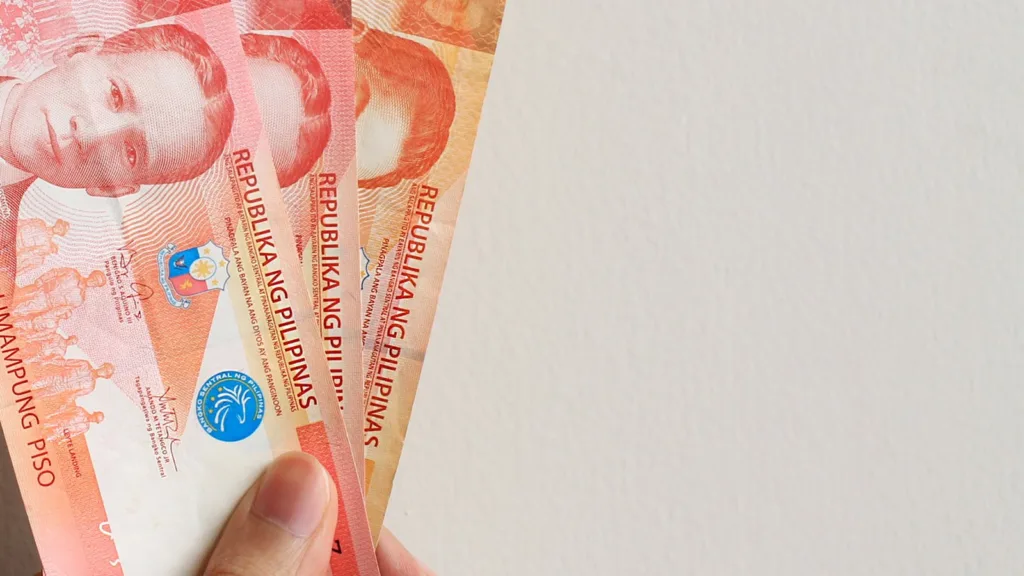
Under the 1987 Investments Code the visa lapses automatically if the investor withdraws, and the Board of Investments treats failing to keep the USD 75,000 minimum invested as grounds for cancellation.
The Special Investor’s Resident Visa, or SIRV, lets a foreigner live in the Philippines indefinitely in return for an investment of at least USD 75,000. The Omnibus Investments Code of 1987 entitles the holder to reside “while his investment subsists”. If the investor withdraws it, the visa “will automatically expire”.
Keeping the investment in place
The Board of Investments, which evaluates applications and endorses them to the Bureau of Immigration, lists failure to maintain “the minimum US$75,000.00 (PhP equivalent) investment at all times” among the grounds for cancellation. Its guidance says that non-compliance does not make the visa expire automatically: the holder is notified and may respond, and continued non-response may lead to cancellation.
The shares are locked as well. Stock certificates issued to holders must carry an annotation that they cannot be sold, transferred or conveyed without the Board’s prior approval, under the implementing rules.
The Board’s December 2025 charter for the indefinite visa, in its checklist for listed companies, adds “encumbered” and “written consent”. The Board keeps a register of the investments and reports any withdrawal or transfer to the Bureau of Immigration.
By comparison with the SIRV’s USD 75,000 minimum, the Philippine Retirement Authority sets the deposit for the retirement visa’s Classic option by age and pension status, in four different amounts.
Who can apply
The Code lists personal qualifications and no nationality. The implementing rules require applicants to be at least 21 and exclude nationals of countries that the foreign ministry has determined are not entitled to the visa. That list could not be obtained, so whether it names any country was not established.
Spouses and unmarried children under 21 may hold the visa as dependants. A child’s visa is automatically cancelled at 21 or on marriage, and every dependant’s visa ends with the principal’s.
Where the money goes
The USD 75,000 is remitted in foreign currency within the 12 months before the application and held first as a peso time deposit of at least 30 days. The Board’s 2023 guidance and its December 2025 charter for the probationary visa name four accredited banks: the Development Bank of the Philippines, Landbank of the Philippines, EastWest Bank and Security Bank.
The deposit must be converted into eligible investments within 180 days of the issue of the probationary visa. The 2023 guidance sets a late fine of PHP 1,000 plus PHP 100 a day, while the implementing rules list failure to invest in time as a ground for automatic cancellation or blacklisting.
The bank pays only the company receiving the investment or, for listed shares, a stockbroker. The 2023 guidance lists four eligible forms: shares in listed companies; in companies in the Board’s Strategic Investment Priorities Plan; in manufacturing and service companies; and government securities held for at least a year.
The guidance rules out shares in wholesale-trading companies, condominium units and a restaurant business. The implementing rules exclude partnerships.
The weekly bulletin
Probation, then indefinite
The probationary visa lasts six months. On proof of the investment, the Board endorses the holder to the Bureau of Immigration for an indefinite visa, which carries no expiry date. An investor who already holds eligible investments and remitted at least USD 75,000 in the previous 12 months may receive the indefinite visa directly, subject to the Board’s approval.
There is no physical-presence requirement, only an annual report to the Board. At least a month before the visa ID card expires, the holder files a sworn report.
The supporting documents depend on the investment: financial statements and tax returns for a corporation, stock certificates and a transfer-office certification for listed shares. Late filing brings a fine and may be grounds for cancellation and blacklisting.
Fees per person are the peso equivalent of USD 300 at application, PHP 2,000 for the ID card, and PHP 2,000 plus a PHP 1,010 immigration fee for the indefinite visa.
Applying from Vietnam
The implementing rules allow filing at a Philippine embassy or consulate in the applicant’s home country or place of residence, or at the Board if the investor is already in the Philippines. Current guidance has applicants file at the Board in Makati while holding a tourist (9(a)) visa with at least a month’s validity.
No SIRV service was found among the archived pages of the Philippine Embassy in Hanoi. Its visa page, as of 21 November 2024, lists Vietnamese nationals among those who may enter visa-free for up to 30 days.
The Philippines did not object to Vietnam’s accession to the Apostille Convention, so the Convention has applied between them since 11 September 2026, according to the Hague Conference’s status table. The foreign ministry’s 2019 advisory says documents apostilled in Convention states, bar four named countries, need no Philippine embassy authentication.
The Board’s latest texts, written before 11 September 2026, still ask for embassy-authenticated civil documents. Its acceptance of Vietnamese apostilles was not confirmed.
Buying shares to take part in managing a Philippine company is outward investment under Vietnam’s Investment Law 143/2025/QH15. Below VND 7 billion and outside the five conditional sectors, which include real estate business, it needs only foreign-exchange registration under Decree 103/2026/NĐ-CP. Buying listed shares or government securities falls under a separate category whose rules for individuals were not established.
Tax
No tax status attached to the visa itself was found. Section 24 of the National Internal Revenue Code, as amended by Republic Act 12214 in force since 1 July 2025, sets a final 20% on bank-deposit interest and a final 10% on dividends an individual receives from a domestic corporation.
Section 25, on nonresident aliens, sets 20% on such dividends for one engaged in business. It sets a final 25% on the Philippine-source income of one not engaged in business, interest and dividends included.
A nonresident alien who stays more than 180 days in a calendar year is deemed to be doing business in the Philippines. Which category the tax authority applies to a holder was not established.
What this article has not established
The foreign ministry’s list of nationalities excluded from the visa, the Board’s practice on Vietnamese apostilles since September 2026, and whether 30-day visa-free entry meets the tourist-visa requirement were not established.
The tax category that applies to a holder, and the rules for a Vietnamese individual buying listed shares or government securities abroad, were not established.
How the peso equivalent of USD 75,000 is measured over time was not established. The Code lowers the amount to USD 50,000 for investors under Executive Orders 63 and 1097, which were not examined.
Whether the Code’s SIRV provisions or the implementing rules, as amended in 2001, were changed afterwards was not established; the 2023 guidance and the 2025 charters still cite them.
Several Philippine official sites, among them the Board’s, the foreign ministry’s and the Senate’s, could not be reached directly. Their texts were read in Internet Archive copies, the Board’s latest captured on 19 January 2026, so later changes were not checked.