The same Philippine retirement visa carries four different deposits
 Edward Nguyen
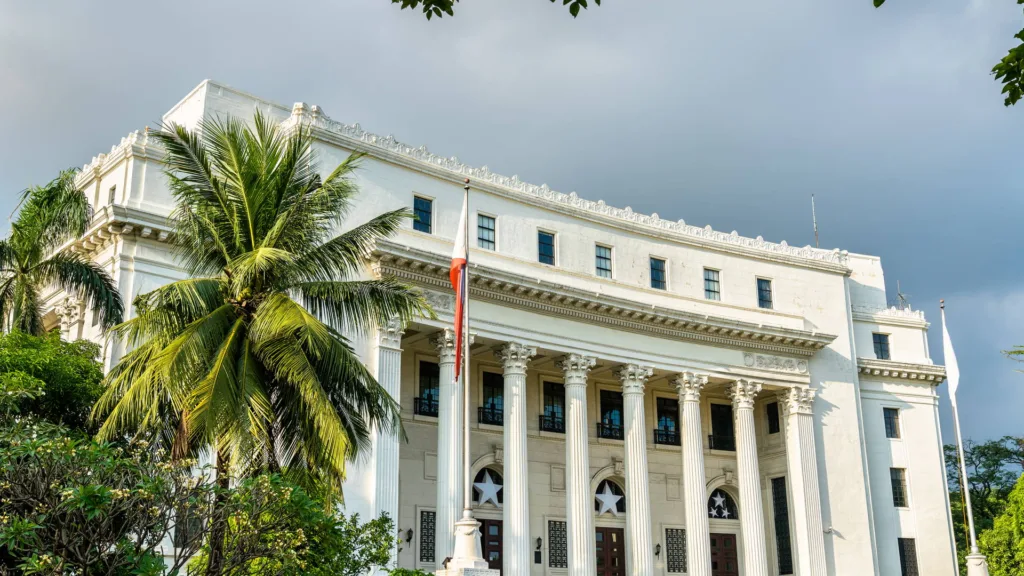
A public building in Rizal Park, Manila — illustration. The four deposit bands described here are published by the Philippine Retirement Authority, and the visa itself is issued by the Bureau of Immigration.
The Philippine Retirement Authority sets the SRRV Classic deposit by the applicant's age and by proof of a qualifying lifetime pension, and the four figures run from USD 15,000 to USD 50,000.
A foreigner applying for the Philippines’ retirement visa does not face one deposit. The Philippine Retirement Authority publishes four for the same visa. Which one applies turns on the applicant’s age, and on whether they can prove a lifetime pension large enough to qualify. The lowest of the four is USD 15,000 and the highest is USD 50,000.
Four cells, one visa
The Authority sets the deposit for SRRV Classic in a table of four cells, divided by age at fifty and by pension status. A pensioner of fifty or over deposits USD 15,000, and one between forty and forty-nine deposits USD 25,000. A non-pensioner deposits USD 30,000 at fifty or over, and USD 50,000 between forty and forty-nine. Forty is the floor either way, because the Authority’s list of qualified applicants puts the principal at forty years old and above.
Nothing on the page attaches a different entitlement, a different term or a different benefit to any of the four cells. The visa is the same visa. What changes is the size of the deposit.
Being a pensioner is a qualification rather than a description of how someone lives. The Authority asks for proof of a lifetime pension of at least USD 800 a month for a single applicant, and at least USD 1,000 a month for an applicant bringing dependants. The table has only two rows, and that proof is what the pensioner row requires. At either age, the non-pensioner deposit is double the pensioner deposit.
The deposit and the fees are different things
The Authority calls the sum a Visa Deposit, and describes SRRV Classic as an option for retirees “who may opt to use the Visa Deposit/Requisite Dollar Time Deposit for investment purposes allowed under the SRRV program”. Whether it comes back, and on what terms, is not something the page as read establishes.
The fees are separate, and the Authority calls them fees. There is a processing fee of USD 1,500. There is then an annual fee, which for SRRV Classic is USD 360 covering the principal and two dependants, with a further USD 100 for each dependant beyond two. The Authority is explicit about how long that runs: the annual fee “is payable upon joining the program and every year thereafter as long as the retiree is a holder of the SRRVisa”.
The deposit must arrive as an inward remittance from a bank abroad, into an account at a bank the Authority has accredited. It names the Development Bank of the Philippines on the government side, and six private banks, one of which is accredited at two named branches only.
A third dependant adds a flat USD 15,000 deposit
The deposit covers the principal and two dependants. A third one adds to it. The Authority requires a visa deposit of USD 15,000 for each additional dependant in excess of two, and exempts former Filipinos from that requirement.
That figure does not move with the principal’s band. It is the same USD 15,000 whether the principal deposited USD 15,000 or USD 50,000. Set against the first of those, the surcharge is the whole of the principal’s own deposit; set against the second, it is under a third of it. That is a comparison of deposits only, and it is this article’s arithmetic rather than the Authority’s. The fees sit outside it, and each dependant beyond two adds a further USD 100 to the annual fee.
Dependants are defined narrowly. A spouse must be legally married to the principal. Children must be unmarried and below twenty-one at the date of application, and either legitimate or legally adopted.
What the Bureau’s own list shows
The Authority describes the SRRV as “a special non-immigrant visa issued by the Bureau of Immigration of the Philippines, under the retirement program of the Philippine Retirement Authority”. The same page opens its list of benefits with a heading that reads “Permanent residency in the Philippines”. Both descriptions sit on the page as read, and this article reports the pair without trying to reconcile it.
The Bureau of Immigration publishes its own index of visa types, running from the Temporary Visitor Visa to the Special Visa for Employment Generation. Read on 15 September 2026, that index does not contain the strings “SRRV”, “retiree” or “Retirement Authority” once. That is a statement about one link index of roughly 1,240 characters and about nothing wider: this check did not search the rest of the Bureau’s site, and the absence is not evidence that the Bureau publishes nothing on the visa elsewhere.
Where the record stops
Four things are open. Whether the deposit comes back, and on what terms, is not established by the page as read. Interest is not established either: the Authority’s Finance menu carries an item labelled Interest Rates, and it was not opened in this run. The Courtesy option’s own deposit figures could not be used, because that table’s published markup does not align its cells to its headings. And Executive Order 1037, the charter the Authority operates under, was not read.
The Legation Times writes its content from published documents; nothing here is legal, tax or investment advice. Spotted an error? Send a correction request; for content rights, send a takedown request.