Why Vietnam has no golden visa: proposals since 2025, no stated reason
 Edward Nguyen
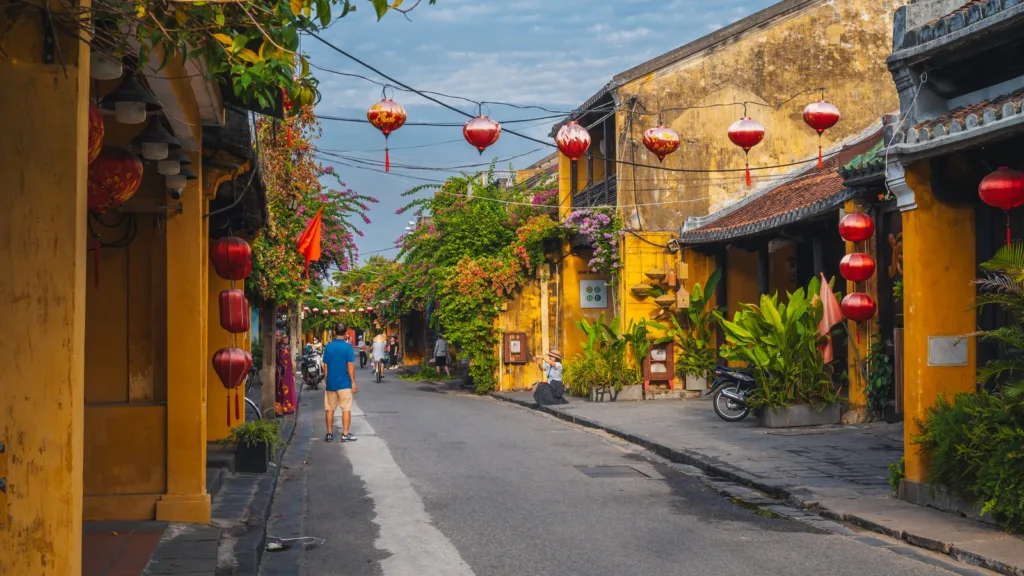
Hoi An old town, Vietnam — illustration.
No official draft of a Vietnamese golden visa was found in the texts reviewed. Qualifying investors can obtain business-linked residence cards, and some may be considered for Vietnamese citizenship.
The official texts reviewed for this article establish no golden visa programme, and no official draft of one was found. None of them explains why. The proposals on record come from a tourism advisory board and a private company, while the Government asked ministries to study longer visas for tourists and retirees. Qualifying investors can instead obtain residence cards tied to their business, and some may be considered for naturalisation.
Proposals on record
VnExpress reported that the Tourism Advisory Board proposed a golden visa of five to ten years in a letter to the Prime Minister dated 25 March 2025. The board also proposed a ten-year investment visa with a path to permanent residence after five years if the investment was maintained. The board advises the Government and does not decide policy. In May 2025, an article on the culture ministry’s portal quoted a Vingroup marketing director suggesting a three-to-five-year golden visa for experts, scientists and investors.
The official instructions reviewed concerned studying a tourism visa pilot and proposing visa incentives for specified groups. Directive 08/CT-TTg of 23 February 2024 asked the Ministry of Public Security to study a pilot multiple-entry visa of 12 to 36 months for high-end tourists and high-spending retirees. No text implementing that pilot was found in the sources reviewed for this article. Official Dispatch 34/CĐ-TTg of 10 April 2025 asked ministries to propose visa incentives for groups including investors and billionaires entering Vietnam for tourism.
When the immigration law was amended in late 2025, proposals were made for startup and tourist visas. The Government answered that the existing visa and residence-card rules already allowed foreigners short or long stays, Thanh Niên reported.
At a Ho Chi Minh City consultation on 27 May 2026, Sun Group proposed making foreign homeowners eligible for visas of up to five years and residence cards of up to ten, PLO reported. The consultation concerned a draft law on special urban areas. The enacted Law 18/2026 on Urban Development takes effect on 1 October 2026. It applies its special mechanisms to Ho Chi Minh City and other special-class cities, while Hanoi follows the Capital Law. Its Article 38(3) covers foreign experts, scientists, managers, highly skilled workers, innovative startup founders and individual investors in innovative startups. They and their family members may be considered for visas and temporary residence cards under existing law. The city authorities set the scope, fields and conditions of the support. The clause makes no reference to home ownership and creates no new visa category.
Buying a home does not bring residence
The Sun Group proposal would have linked home ownership to residence. The 2023 Housing Law requires a foreign individual to be permitted to enter Vietnam before qualifying to own housing. That condition concerns entry permission, not residence obtained through a purchase. Foreigners may buy only in housing projects outside areas reserved for defence and security, and only up to 30% of the apartments in a building or 250 houses in an area with the population of a ward. The usual term for foreign individuals is up to 50 years, with one extension of up to 50 years. Separate rules apply to foreign spouses of Vietnamese citizens living in Vietnam and of overseas Vietnamese permitted to enter Vietnam. The 2024 Land Law does not list foreign individuals among land users.
What investors can use instead
A foreign investor contributing 100 billion dong or more, or investing in a sector or area the Government lists as preferential, can hold a temporary residence card of up to ten years under the ĐT1 category. Decree 221/2025 offers a special visa-exemption card of up to five years; for investors, it looks to companies among the world’s 100 largest by market capitalisation. At the International Financial Centre, Resolution 222/2025 and Decree 327/2025 allow important investors and certain staff visas or residence cards of up to ten years.
Naturalisation for investors
Law 79/2025 amended the nationality law from 1 July 2025. Applicants whose naturalisation would benefit the State may be granted Vietnamese nationality without meeting four requirements: Vietnamese-language ability, current permanent residence, five years of permanent residence and means of support. The other conditions still apply. Decree 191/2025 counts businesspeople and investors with business or investment activities in Vietnam among those who benefit the State. A ministry-level authority must certify that they will make a positive, long-term contribution to Vietnam’s development. No investment amount is set.
Naturalisation is refused if it would harm Vietnam’s national interest. An applicant who wants to keep a foreign nationality needs the President’s permission, and the foreign country’s law must allow it. The applicant must not use that nationality to harm the lawful rights and interests of bodies, organisations or individuals, or Vietnam’s national security, national interest, public order or social safety.
Neighbouring schemes
Thailand’s Long-Term Resident visa runs for up to ten years in two five-year terms and includes a category for wealthy global citizens. Malaysia’s MM2H grants a renewable social visit pass in several tiers. Indonesia introduced a golden visa of five to ten years in 2023, and the Philippines issues a Special Resident Retiree’s Visa through its Philippine Retirement Authority.
For an investor whose capital comes with a residence decision, the routes differ. Under the rules announced in 2023, Indonesia’s golden visa gives an investor a stay permit of five or ten years, and investors who do not set up a company may qualify by placing funds in government bonds, listed shares or deposits. Thailand’s wealthy-global-citizen tier accepts government bonds, direct investment in Thai-registered companies or Thai property as the qualifying investment. No text reviewed for this article gives residence in Vietnam for a bond purchase, a bank deposit or a home. An investor’s temporary residence card rests on a capital contribution of 100 billion dong or more, on investment in a sector or area the Government lists as preferential, at the International Financial Centre on the investor’s standing under its rules, or, in the special-class cities, on the conditions set under Law 18/2026. A foreign individual may own a home only if permitted to enter Vietnam, and then only within the limits set out above.
For Vietnamese families
People of Vietnamese origin living abroad are listed as land users under the Land Law, unlike foreign individuals. Overseas Vietnamese, and the foreign spouses and children of overseas Vietnamese or of Vietnamese citizens, can obtain a visa-exemption certificate of up to five years under Decree 82/2015. For a foreign partner in a Vietnamese family business, residence depends on the investment category or on family ties, not on buying property.
The Legation Times writes its content from published documents; nothing here is legal, tax or investment advice. Spotted an error? Send a correction request; for content rights, send a takedown request.