Türkiye identifies 1,070 citizenships from collusive property sales
 Edward Nguyen
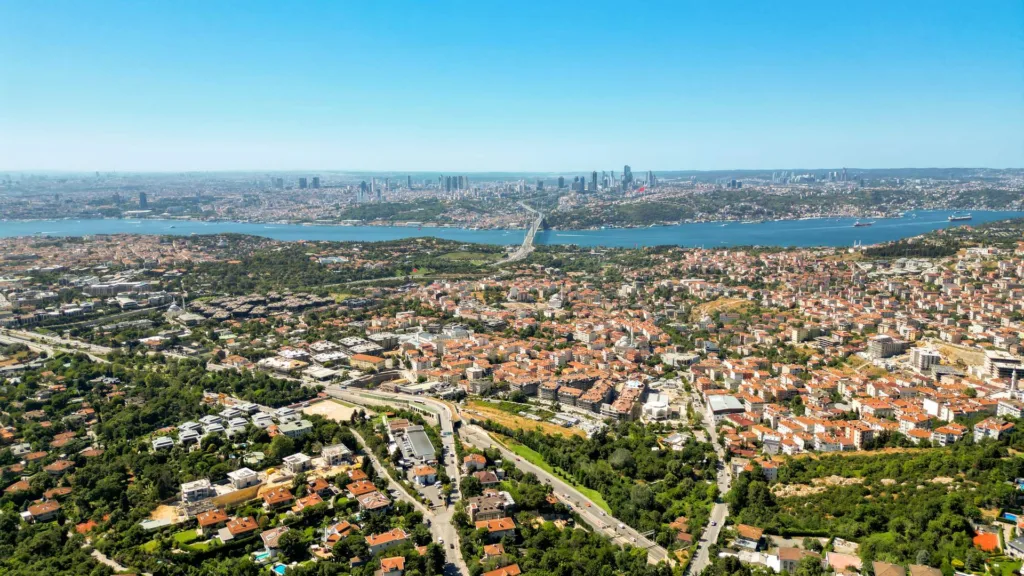
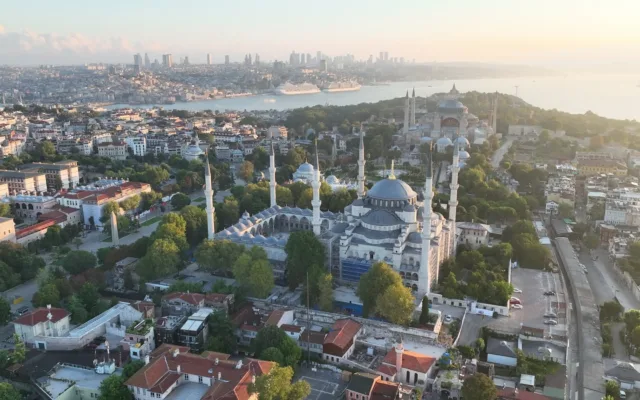
A residential district on the Bosphorus in Istanbul — illustration. The second wave examined 734 property sales to foreign nationals.
Istanbul prosecutors say 274 sales by three developers were collusive; the interior ministry says the citizenships went to 263 investors and 807 family members, and the annulment process has been started.
Turkish prosecutors said on 21 September 2026 that 1,070 people had acquired Turkish citizenship through property sales they found to be collusive, and that the administrative process to annul those grants had been started. It is the second wave of an investigation run by the Istanbul Chief Public Prosecutor’s Office, and it names a larger group than the first wave did. No annulment decision against anyone in the group has been reported.
What the second wave found
The Justice Minister, Akın Gürlek, set out the arithmetic in a statement the same day. Investigators examined property sales made through three builders — Gül İnşaat AŞ, Beyaz İnşaat and LİV İnşaat — covering 734 sales to foreign nationals. Of those, 274 were found to be collusive. In the prosecutor’s account, the foreign currency the citizenship route requires was not in fact brought into the country, and the purchase and sale were carried out using the financial resources of the intermediary companies or of the sellers. Valuation reports were drawn up at high values contrary to the truth, which Milliyet reports was done to show the properties above their real worth.
The Ministry of the Interior broke the 1,070 down two ways. By role, 263 are investors and 807 are family members. By timing, 1,015 held citizenship at the date of the decision and 55 children acquired it afterwards. The statement does not say how one cut maps onto the other.
Eleven further people were described as still in the acquisition process, and the ministry’s account of those eleven does not hold together: one has been withdrawn, three refused, and seven, it says, never applied at all. Nobody reconciles that with the description of all eleven as people whose process is continuing.
The operation ran in 13 provinces on the morning of 21 September, with searches at 78 addresses. Gürlek said 88 suspects were made subject to judicial process and 72 detained; Anadolu Agency, Sabah and Milliyet each reported 73 detained, and nothing reconciles the two. Precautionary measures were placed on 2,011 properties, a hotel in Bağcılar, 86 motor vehicles, two yachts and 42 bank accounts, and trustees appointed to 30 companies.
Identified is not annulled
The verb in the prosecutor’s statement is precise and worth holding on to: the necessary administrative process for annulling the irregularly acquired citizenships has been initiated. Nothing read for this article reports a decision taken against any of the 1,070.
That distinction is where the statute begins to matter. Law No. 5901 gives the state two instruments. Article 31 annuls a grant obtained through the applicant’s false declaration or concealment of matters material to the decision, and the annulment is made by the authority that made the grant; Article 40 withdraws a decision where it later emerges that the legal conditions were never formed. The ministry’s running totals are expressly taken under both. The statements about the 1,070 use only the word for annulment, which is the Article 31 remedy, but neither names an article. What follows therefore describes what happens if these grants are annulled under Article 31, not what has been decided.
Neither article has been touched since 2009: the amendment table attached to the consolidated text on the government legislation portal lists seven amending instruments, the latest in force in December 2019, and Articles 31, 32, 33 and 40 appear in none of them.
What annulment does is set out in the two articles that follow. Article 32 provides that it takes effect from its date and applies to the spouse and to the children who acquired Turkish citizenship through the person concerned — so one decision can reach a family. Article 33 then puts that person under the foreigners’ residence law, and where liquidation of their property is deemed necessary the annulment decision says so; in that case they have one year at the outside to sell up in Türkiye, failing which the Treasury sells and banks the proceeds in their name. The obligation is not automatic, and arises only where the decision states it. Article 33 also provides that where the person brings proceedings against the decision, liquidation is deferred until the end of the case.
Two figures that cannot be added
The ministry restated its cumulative position on 21 September: 1,150 investors whose conformity certificates were cancelled, with 5,391 people annulled; 263 investors and 743 people withdrawn on public-order and national-security grounds; 1,413 investors and 6,134 people in total. Those are the numbers this publication reported on 28 August, and they have not moved. Two things about the restatement are unexplained.
The first is that 263 appears twice in one statement, on two different grounds. In the cumulative block it is 263 investors withdrawn for public order and national security, coming to 743 people with family. In the 21 September block it is 263 investors identified for sham sales, coming to 1,070 people with family. The ministry does not say whether these are the same investors, and the family totals do not match. The two are not to be added together, and this article does not add them.
The second is why that matters. In the same two statements the ministry’s rolling count since 11 February 2026 rose from 443 investors and 1,358 people on 4 August to 458 and 1,393 on 21 September, while the cumulative 6,134 did not move. A total that stands still while one of its own sub-counts rises is not a running tally, whatever else it is.
Transaction values, and what the network is said to have taken
The sources give two transaction totals without explaining their relationship, and one alleged per-person amount. The prosecutor’s statement puts at USD 72,250,000 the transactions that should have been paid on the citizenship procedures and were carried out collusively; Milliyet renders the same figure as foreign-currency inflow that did not take place. Gürlek puts the collusive transactions at more than TL 3.5 billion. Separately, Milliyet’s account of the case file — the only source read here that carries it, and no official statement does — assesses the network as having taken around USD 50,000 per person from the foreign nationals involved. That third figure is money the organisers are alleged to have received, not a transaction value. No source gives an exchange rate, so no conversion is attempted here.
None of the three is the threshold. The Investment Office of the Presidency publishes the scale as set “per the new regulations published in the Official Gazette on September 18, 2018”, and on the property route it requires acquiring a property worth at least USD 400,000 with a three-year resale restriction on the title deed.
What to watch
Both waves have been organised around the seller. The first examined transactions connected to Babacan İnşaat and found 687 people; the second examined 734 sales made through three other builders and found 274 of them collusive. Neither statement dates the first wave, and neither says the examined sets are all the sales those companies made. The narrower point is the useful one: the statement identifies 274 of the 734 assessed sales as collusive and says nothing about the status of the remaining 460.
The valuation system itself changed in 2024, though the sources do not date the transactions under investigation. Since 2024 the valuation report for the property route has been issued by GEDAŞ, a subsidiary of the state housing agency, under the coordination of the land registry, in place of the licensed private valuers used before — and the valuation report is the document the prosecutor says was drawn up contrary to the truth. The ministry states that the matters under investigation are forgery attempts relating to pre-application documents, and that there was no weakness or negligence within the duties and powers of the population and citizenship directorate.
The next thing to look for is not another operation. It is the first annulment decision taken against someone in this group, because that decision is what reaches, under Article 32, the spouse and children who acquired citizenship through the person concerned — and it is the decision that says, or does not say, that property must be sold.
The Legation Times writes its content from published documents; nothing here is legal, tax or investment advice. Spotted an error? Send a correction request; for content rights, send a takedown request.