Sri Lanka’s Golden Paradise visa asks for a USD 200,000 deposit
 Michael Mai
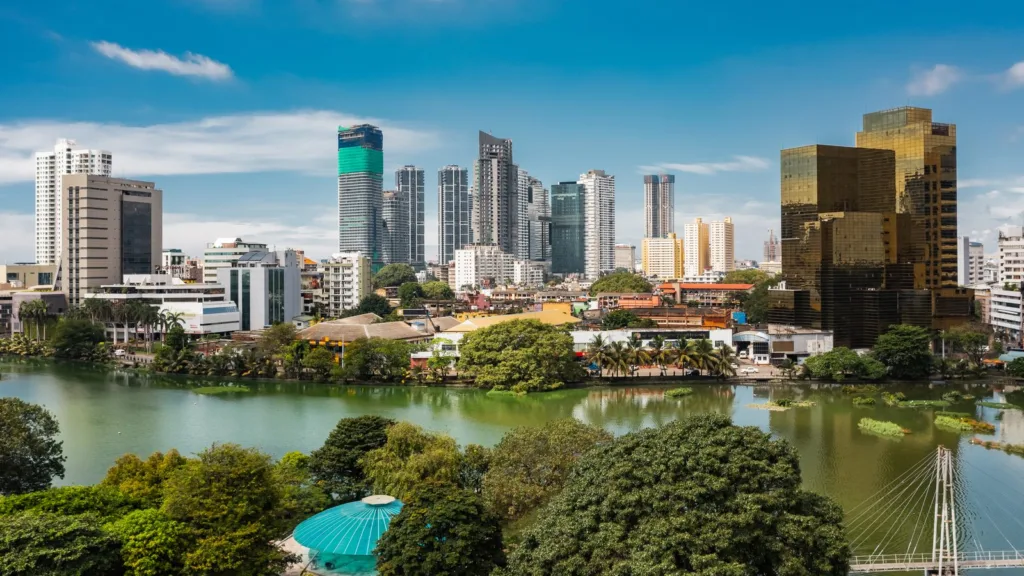
Central Colombo, Sri Lanka — illustration. Sri Lanka's Digital Nomad Visa asks the main applicant for a monthly remittance of at least USD 2,000; the Golden Paradise Visa asks for a USD 200,000 deposit.
Up to half the minimum investment may be withdrawn a year after the 10-year visa is issued; a separate one-year remote-work visa asks the main applicant for a monthly remittance of at least USD 2,000.
Sri Lanka offers two long-stay routes to foreigners who bring money rather than a local job. The Golden Paradise Visa, run by the Department of Immigration and Emigration, grants residence for 10 years to an investor who deposits at least USD 200,000 in a designated foreign-currency account at a Sri Lankan bank. The Digital Nomad Visa, set out in a department guideline whose file is dated 13 January 2026, is issued one year at a time to people whose income comes from outside the country. One asks for capital, the other for a monthly remittance.
What the Golden Paradise Visa requires
The department describes the Golden Paradise Visa as a special category of residence visa for foreigners who make an investment in a government-approved bank. The applicant opens a Golden Paradise Foreign Currency Account at a commercial bank licensed by the Central Bank of Sri Lanka and deposits a minimum of USD 200,000. The spouse and dependants of the principal applicant may apply for the same visa.
The figure is the same on the programme’s landing page, on a department brochure whose file is dated December 2022, and in the investor section of the department’s residence-visa page, on a site that shows a last update of 21 September 2026. According to all three, the investor may withdraw up to 50% of the minimum investment once the first year from the date the visa is issued has passed.
The visa runs for 10 years. The fee is USD 200 per person per year, payable for the full decade, which the landing page states as USD 2,000.
The application starts on the department’s e-services portal, and the residence visa application and supporting documents are submitted to the department’s head office. The department issues a letter so that the account can be opened, and the visa is issued once the bank details, a confirmation of the remittance from the Central Bank or the bank, and the fee have been received. Applicants supply a police clearance from their country of domicile obtained within six months, a medical report from an authorised hospital in Sri Lanka covering malaria, filariasis, tuberculosis and HIV/AIDS, the passport bio-data page, a residence visa application and a personal particulars form, with marriage and birth certificates for family members.
Two figures on the same portal
The programme’s own portal still links to an older document. Internal Circular No. 01/2022/VISA, dated 25 May 2022, set the minimum investment at USD 100,000 and required a minimum of USD 50,000 to be kept in the account for the rest of the visa period after the first year.
On 6 October 2022 the national daily The Morning reported that the minimum had been raised to USD 200,000 on the recommendation of President Ranil Wickremesinghe, with USD 100,000 withdrawable after a year. The paper quoted the state minister of investment promotion, Dilum Amunugama: “This basically means we are giving a 10-year visa for $ 50,000, so the President did not agree to it.” The brochure file of December 2022 carries the higher figure, as do the pages in use today. None of the pages that state the higher figure names or links any instrument documenting the reported change, and the department’s list of downloadable circulars does not include the 2022 circular either; the circular with the lower figure remains posted on the programme portal beside pages that state the higher one.
The circular also records a step the current pages do not describe: personal particulars forms and police reports go to the Ministry of Defence for security clearance, and a visa already granted is cancelled if clearance fails.
What the deposit does and does not buy
The landing page says holders “can Invest, Live and Study in Sri Lanka”, and lists what that investment could be: a government-approved investment, a condominium, land and buildings on lease, or Sri Lanka Development Bonds. The brochure adds that Sri Lankan government rules and regulations apply to those privileges. The qualifying condition remains the deposit; the list describes what a holder may go on to do.
The department considers written requests to cancel the visa. Its landing page says the investment is released upon cancellation of the Golden Paradise visas of the holder, the spouse and the dependants, and the brochure says the deposited sum can be withdrawn only after cancellation. The pages therefore allow a partial withdrawal after the first year and tie release of the investment to cancellation, but they do not state in words the balance that must remain in the account in between.
The same residence-visa page lists other investor categories — direct investment, condominium purchase, government bonds and the share market — each with its own investment thresholds. They are separate routes and are not covered here.
The remote-work route
The Digital Nomad Visa is aimed, in the department’s words, at foreign professionals “who wish to live and work remotely from Sri Lanka while serving clients or companies based outside the country”. CNBC reported in February 2026 that it had been launched that month.
The main applicant must be 18 or over and engaged in remote employment or freelancing, or own a business not registered in Sri Lanka that serves clients outside the country. The guideline’s income condition reads, in full: “Minimum monthly income remittance of USD 2,000 for the main applicant and if the dependent count increases more than 2, additional USD 500 should be remitted monthly for each.” The file includes international health insurance covering care in Sri Lanka, a police clearance no older than three months, a medical clearance, a security clearance form, proof of the monthly remittance and a recommendation from the Ministry of Digital Economy.
The visa is issued for one year and is renewable annually. To renew, the holder submits the first-issuance documents again together with proof of tax registration with the Inland Revenue Department. The fee is USD 500 a year each for the main applicant, the spouse and every dependant; the department’s fee schedule lists the category as “Residence Visa – 10 Digital Nomad” at USD 500.
Holders may open personal bank accounts, rent or lease property and enrol their children in international or private schools. They may not take local employment: all income must be earned from foreign sources, and changes in employment, income or dependants must be reported to the department within 30 days.
Applications go to the department’s Residence Visa Division, and an approved visa is endorsed on the passport. The department lists the category among its residence visas and publishes its fee. It does not publish how many applications have been received or decided.
Where the two routes differ
The Golden Paradise Visa requires a qualifying deposit held in a Sri Lankan bank, with residence granted for a decade and the fee paid for the whole period. The Digital Nomad Visa requires income earned from foreign sources and evidence of a minimum monthly remittance into Sri Lanka, with residence granted for a year at a time and proof of tax registration required when the holder applies to renew.
The published documents leave several matters open, among them whether any instrument formally amended or superseded the 2022 circular’s USD 100,000 minimum, the balance a Golden Paradise holder must keep after the first-year withdrawal, how the additional monthly remittance is calculated when there are more than two dependants, and the procedure for obtaining the Ministry of Digital Economy’s recommendation.
The Legation Times writes its content from published documents; nothing here is legal, tax or investment advice. Spotted an error? Send a correction request; for content rights, send a takedown request.