IMD World Competitiveness Ranking 2026: when institutional credibility becomes a scarce asset
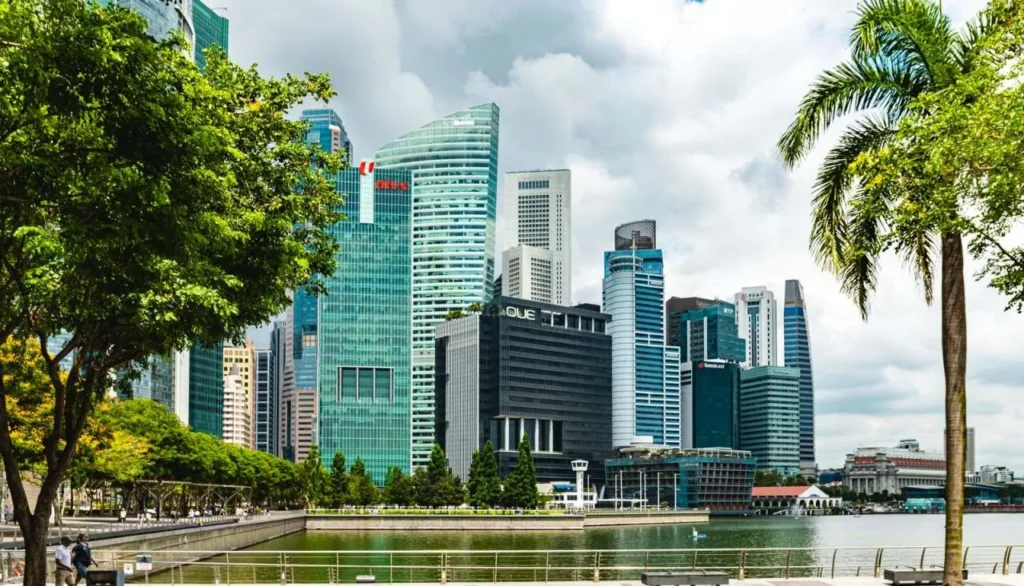
The IMD 2026 competitiveness ranking ranks 70 economies on 341 criteria. The Legation Times analyzes why this year's message is about institutional reliability, and what that means for capital flows and investors.
Fact Table
What does the IMD 2026 rankings measure?
According to the Institute for Management Development (IMD), the 2026 World Competitiveness Ranking evaluates 70 economies on 341 criteria, combining statistical data with a survey of about 6,900 business leaders. It is one of the oldest and most widely cited measures of national competitiveness.
The criteria are grouped into four large groups: Economic results, government efficiency, business efficiency and infrastructure. Neither group bears the name “institutional trust” directly, but that concept is the thread IMD uses to explain this year's results. Readers can view this article as a way to read the rankings, not as a replacement for the original report.
2026 Results: Changes at the top
Singapore returned to number one after ranking second in 2025 — the last time this island nation held the top spot was in 2024. The main driving force, as announced by the Singapore Economic Development Board (EDB), comes from corporate performance, the criteria group has jumped from 8th to 1st.
| Class of 2026 | Economy | Notes |
|---|---|---|
| 1 | Singapore | From 2nd place (2025); business efficiency 8 → 1 |
| 2 | Hong Kong | — |
| 3 | Switzerland | — |
| 4 | Taiwan | Highest level ever (from 6th place in 2025, 8th place in 2024) |
In the first group, the case of Taiwan is notable: According to Focus Taiwan, this economy climbed to fourth place – the highest ranking in participation history – following a steady upward trend for many years. It is worth mentioning that this year's leading positions are not concentrated in the largest economies, but in places that operate smoothly and stably.
Core message: Institutions, not costs
The central conclusion of this year's IMD is a shift in the way competitiveness is understood. Leading economies are no longer simply the richest or most innovative, but the ones with well-functioning institutions. In other words, competition is no longer primarily a race for cost, scale or even innovation — but a race for institutional credibility.
In a world increasingly fragmented and subject to geopolitical pressures, IMD argues that trustworthy governance has become the most sustainable competitive asset a place can build, and the most difficult to copy. What the leading group has in common is predictability: Investors, talent and businesses know what's coming, and today's rules are likely to be tomorrow's rules.
For readers accustomed to tracking capital flows and global movements, this is not a new observation, but its appearance as the central conclusion of a long-standing ranking is a remarkable signal: The market is valuing stability more highly than before.
Why is this signal important to investors?
IMD's rankings do not discuss immigration or investment settlement. Yet the logic underlying it—that people are willing to pay a price for predictability—is the same logic that shapes investors' asset allocation and movement decisions. When stability becomes scarce, mobility alone is a lifestyle convenience; it becomes a variable in the strategic calculation of a family or a fortune.
This explains why, in cross-border wealth planning conversations, the key consideration is often not the tax rate or yield at any point in time, but the degree to which an institution can keep its profits over the years. A stable regulatory framework, established by law rather than by reversible administrative decisions, is often more valuable in the long term than an attractive but volatile incentive.
The Legation Times makes this observation in a spirit of neutrality. This is not an investment or immigration recommendation, and a competitiveness ranking is not a substitute for country-by-country or program-specific appraisal. For decisions with legal or tax elements, readers should consult with attorneys and professionals licensed in the relevant jurisdiction.
How to read a competitiveness ranking
Every composite index is a narrow slice of reality. The IMD rankings measure an economy's competitiveness for businesses, not directly the quality of life, level of inequality or people's freedoms. Two economies with the same ranking can be very different in aspects that this measure intentionally does not include.
So when faced with a competitive ranking, the useful question is not just who comes out on top, but what the metric is including, what it's ignoring, and what factors are valued more highly this year than last. It is in the last question that IMD 2026's findings really have weight: The factor that is being appreciated this year is the reliability of a country's operating system.
It is also a reminder that today's favorable conditions are not automatically sustainable. A stable environment is the result of time and committed commitment, not of a single policy — and that's what this year's rankings, in an indirect way, are measuring.
Sources: IMD 2026 World Competitiveness Ranking · Singapore Economic Development Board: 2026 IMD ranking
The Legation Times writes its content from published documents; nothing here is legal, tax or investment advice. Spotted an error? Send a correction request; for content rights, send a takedown request.
← Back to updates